
Best Endoscope vs Standard Cameras: Which Suits Your Needs?
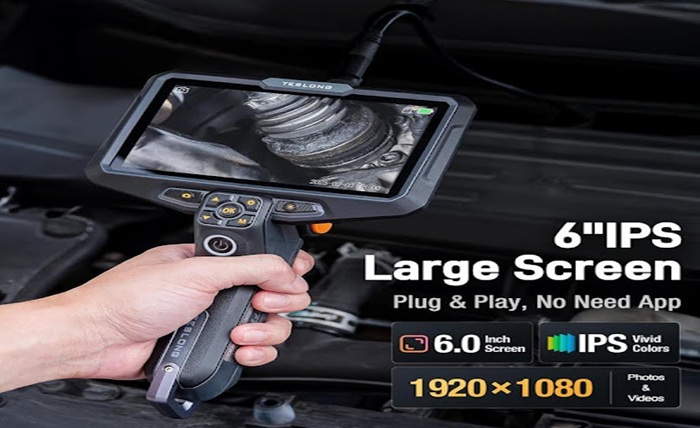
Imagine spending hours trying to diagnose a mysterious engine knock, only to discover the problem was a cracked valve hidden deep within the cylinder head—a fault invisible without the right tool. For professionals who routinely face hidden defects in pipes, engines, or structural cavities, choosing between an advanced endoscope and a standard inspection camera can mean the difference between a quick fix and costly guesswork. Automotive technicians, in particular, need precise visual access to confined spaces where traditional cameras simply cannot reach. The wrong choice wastes time, delays repairs, and frustrates clients expecting fast turnarounds.
This article breaks down the critical differences between the best endoscope options and standard cameras, comparing their features, ideal applications, and practical value across industries. Whether you’re inspecting brake lines, HVAC ducts, or industrial pipelines, you’ll find actionable guidance here to match the right device to your specific workflow—saving time, improving accuracy, and maximizing your investment in diagnostic equipment.
Understanding Endoscopes and Standard Cameras: Core Differences
An endoscope is a specialized probe-based inspection tool designed to navigate tight, enclosed spaces that remain invisible to the naked eye. These devices feature flexible or semi-rigid cables tipped with miniature cameras, allowing technicians to snake through engine compartments, pipe interiors, and wall cavities with precision. Standard cameras, by contrast, are general-purpose imaging devices built for surface-level documentation—think handheld digital cameras or fixed-mount units used for broad visual recording rather than internal exploration.
The design differences between these tools are fundamental. Endoscopes prioritize narrow-diameter probes (often 3.9mm to 8.5mm), articulating tips that bend around obstacles, and integrated LED illumination for pitch-dark environments. Standard cameras rely on conventional optics, larger sensor arrays, and external lighting setups suited to open or well-lit areas. Their portability profiles also diverge significantly: endoscopes are engineered for single-handed operation in awkward positions, while standard cameras assume stable, unobstructed shooting conditions.
This distinction matters because choosing the wrong tool directly impacts diagnostic efficiency. A standard camera cannot reveal corrosion inside a heat exchanger tube or a hairline crack behind a cylinder wall. Conversely, deploying an endoscope for routine exterior documentation wastes its specialized capabilities. Understanding where each tool’s strengths begin and end helps professionals across automotive repair, plumbing, manufacturing, and facility maintenance allocate their equipment budgets wisely and complete inspections faster with greater confidence in their findings.
Key Features of the Best Endoscopes: What to Look For
When evaluating inspection camera features that separate professional-grade endoscopes from basic models, resolution tops the list—look for 1080p or higher to capture fine cracks, corrosion patterns, and material degradation with clarity sufficient for confident diagnosis. Adjustable LED lighting with variable intensity is equally critical, since over-exposed reflections on metallic surfaces obscure defects just as readily as insufficient illumination in deep cavities. Waterproof ratings of IP67 or higher ensure reliable operation inside flooded pipes, coolant-filled chambers, and humid ductwork without risking equipment failure mid-inspection. Connectivity options including WiFi streaming to smartphones, USB output for laptop recording, and onboard SD card storage give technicians flexibility to document findings instantly, share footage with clients, and archive inspection records for warranty or compliance purposes. Together, these features transform a simple visual probe into a comprehensive diagnostic platform that reduces repeat inspections and supports data-driven repair decisions.
Dual Lens Options: Boosting Visibility for Complex Tasks
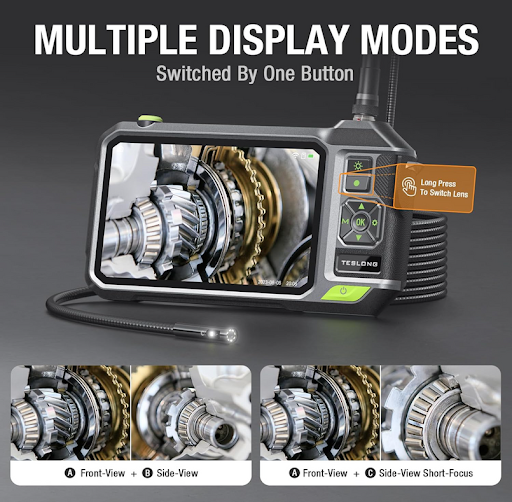
Dual lens endoscopes combine forward-facing and side-view cameras on a single probe tip, eliminating the need to withdraw and reinsert the cable when inspecting perpendicular branch connections or lateral defects inside engine cylinders. Automotive technicians benefit when checking valve seats from within intake ports while simultaneously viewing cylinder wall scoring—tasks that previously required two separate passes. When evaluating dual lens compatibility, confirm that both cameras deliver matched resolution and that the control interface allows seamless switching without interrupting video recording.
Portability and Ease of Handling: Meeting On-the-Go Demands
Field technicians working across multiple job sites need endoscopes light enough for tool bags and operable without external monitors or power sources. Wireless models under 300 grams with built-in rechargeable batteries and smartphone connectivity let mechanics transition from vehicle to vehicle without setup delays. Ergonomic grips with single-thumb articulation controls reduce hand fatigue during extended inspections in overhead or cramped underbody positions.
Applications Across Industries: Where Each Tool Excels
The gap between endoscopes and standard cameras becomes most apparent when you examine how different industries deploy them. Standard cameras serve well for documenting visible damage on exterior surfaces—photographing roof conditions, recording equipment nameplate data, or capturing before-and-after shots of completed repairs. They excel wherever the target is accessible, well-lit, and requires broad-field documentation rather than deep internal investigation. However, the moment an inspection demands visual access beyond what’s reachable by line of sight, endoscopes become indispensable. Their ability to thread through narrow openings and illuminate hidden chambers makes them the default choice for professionals who diagnose problems occurring inside sealed systems. The following industry breakdowns illustrate where each tool delivers maximum value and where substituting one for the other leads to incomplete assessments or wasted capability.
Endoscope Cameras for Automotive Inspections
Endoscope cameras for automotive diagnostics have transformed how technicians approach engine troubleshooting, transmission evaluation, and exhaust system analysis. Instead of disassembling cylinder heads to inspect valve carbon buildup, a technician threads a quality borescope from a manufacturer like Teslong through the spark plug port and captures high-resolution footage in seconds. Brake line inspections inside frame rails, turbocharger turbine wheel assessments, and catalytic converter substrate checks all become non-destructive procedures. The confined geometry of modern engine bays—packed with sensors, wiring harnesses, and layered components—makes standard cameras physically unable to reach fault locations that endoscopes access routinely.
Industrial Endoscopes for Machinery and Pipeline Checks
Industrial endoscopes withstand harsh conditions that would destroy consumer-grade equipment. Manufacturing plants use them to inspect turbine blade erosion, weld integrity inside pressure vessels, and bearing wear within gearbox housings—all without costly disassembly shutdowns. Plumbing contractors rely on robust, long-cable models to locate pipe collapses, root intrusions, and joint separations buried underground. These environments demand chemical-resistant housings, extended probe lengths reaching 10 meters or more, and ruggedized construction that survives drops onto concrete floors.
HVAC Inspection Cameras for Duct and System Maintenance
HVAC inspection cameras address the unique challenge of navigating rectangular ductwork, tight plenum connections, and coil assemblies hidden behind access panels. Technicians use them to verify duct cleaning effectiveness, identify mold growth on insulation linings, and confirm damper operation deep within air handling units. Long semi-rigid probes navigate vertical risers and horizontal runs without collapsing, while models offering thermal imaging overlays help detect temperature anomalies indicating insulation failures or refrigerant leaks at evaporator connections that visual inspection alone would miss.
Solving Automotive Technicians’ Needs: A Step-by-Step Guide
Automotive technicians face a unique set of inspection challenges that demand more than generic solutions. Modern vehicles pack increasingly complex systems into tighter spaces, and customers expect rapid, accurate diagnoses without unnecessary teardowns. Selecting the right endoscope requires a methodical approach that accounts for the specific types of inspections you perform daily, the environments you work in, and the diagnostic confidence your clients demand.
Start by assessing your most frequent inspection tasks. If you routinely check cylinder bores, intake manifolds, and turbocharger housings, prioritize probes with diameters under 5.5mm that fit through spark plug holes and sensor ports without adapter modifications. Technicians who focus on undercarriage work—frame rail inspections, brake line routing verification, and exhaust system internal checks—need longer cable lengths and semi-rigid construction that maintains pushability over extended distances without buckling.
Next, evaluate whether dual lens capability justifies the investment for your workflow. Shops handling frequent engine performance complaints benefit significantly from simultaneous forward and side-view imaging, since carbon deposits on valve faces and scoring on cylinder walls often require both perspectives during a single probe insertion. However, if your inspections are primarily linear—following brake lines or tracing wiring harnesses—a single forward-facing lens with articulation delivers sufficient coverage at lower cost.
Portability requirements depend on whether you work in a fixed bay or travel between locations. Mobile technicians should prioritize wireless models with smartphone integration, eliminating the need to carry dedicated monitors. Battery life exceeding four hours covers a full morning of diagnostics without recharging interruptions. For fixed-shop environments, USB-connected models with larger display screens offer superior image clarity during collaborative diagnosis when showing findings to service advisors or vehicle owners.
Finally, balance functionality against budget by identifying which features directly reduce your diagnostic time. A model with image capture, video recording, and measurement overlay capabilities eliminates the need for separate documentation tools. Prioritize build quality and warranty coverage over accessory count—a durable endoscope that survives daily shop use for three years delivers far greater return than a feature-packed unit that fails after six months of exposure to oil, coolant, and mechanical stress.
How to Choose: Endoscope vs Standard Camera Decision Matrix
Making the right choice between an endoscope and a standard camera comes down to honestly evaluating five factors against your daily work demands. First, consider access requirements: if your inspections consistently involve openings smaller than 25mm or cavities deeper than arm’s length, a standard camera physically cannot perform the job. Second, assess your environment—wet, dark, or chemically exposed conditions require IP-rated endoscopes with integrated illumination, while clean, open-air documentation tasks suit conventional cameras perfectly well.
Budget plays a role, but frame it as cost-per-inspection rather than upfront price. A standard camera costs less initially, yet if it forces you to disassemble components for visual access, labor hours quickly exceed the price difference. Feature needs should map directly to your workflow: dual lens capability matters for technicians inspecting complex geometries, while a plumber running linear pipe checks gains little from that upgrade. Portability becomes decisive for mobile professionals—wireless endoscopes eliminate setup overhead that erodes billable time across multiple service calls. For shops performing only occasional internal inspections alongside frequent exterior documentation, owning both tools at different price tiers often proves more economical than purchasing a single premium device that sits idle half the time.
Implementing Your Choice: Practical Steps for Success
Once you’ve selected your inspection tool, successful integration into daily operations requires deliberate onboarding rather than simply unboxing and deploying. Begin by dedicating time to master your device’s full capability set—practice navigating the probe through sample pipes or spare engine components before using it on customer vehicles. Familiarize yourself with image capture shortcuts, video recording triggers, and any measurement or annotation features that streamline report generation. For team environments, schedule a brief hands-on session so every technician understands proper probe insertion angles, cable bend radius limits, and cleaning protocols that prevent cross-contamination between jobs.
Establish a maintenance routine from day one. Wipe probe tips with approved lens cleaners after each use, inspect cable sheathing weekly for nicks that compromise waterproofing, and store the unit in its protective case rather than loose in a drawer where tools can damage the optics. Calibrate LED brightness settings for your most common inspection environments so you’re not adjusting mid-diagnosis. Track your return on investment by comparing pre-endoscope diagnostic times against current performance—most shops report cutting teardown-based inspections by 40 to 60 percent within the first month. Document successful finds with saved images and video clips, building a reference library that accelerates future diagnoses of recurring issues and demonstrates value to skeptical customers who question non-invasive inspection fees.
Matching the Right Inspection Tool to Your Workflow
The choice between an endoscope and a standard camera ultimately hinges on where your inspections take place and what they demand. Endoscopes deliver unmatched value when work requires navigating confined, dark, or inaccessible spaces—offering specialized features like dual lens configurations for multi-angle visibility, compact portability for field use, and rugged waterproofing that withstands harsh industrial environments. Standard cameras remain the practical choice for surface-level documentation, open-area photography, and general-purpose recording where internal access isn’t required.
For automotive technicians specifically, investing in a quality endoscope eliminates unnecessary teardowns, accelerates diagnosis, and builds client trust through visual evidence of hidden faults. The key is matching your tool to your actual workflow rather than purchasing based on specifications alone. Assess the inspections you perform most frequently, identify the access constraints you encounter daily, and prioritize durability alongside the features that directly reduce your diagnostic time. Use the decision framework and implementation steps outlined here to make a confident, informed purchase that pays for itself through faster, more accurate work and fewer repeat visits to the same problem.