The Role Of Family Dentists In Teaching At Home Oral Care
Your mouth affects how you eat, speak, and feel every single day. You already know you should brush and floss. You still might feel unsure what really works at home and what only a dentist can do. That confusion often leads to skipped care and painful problems later. A family dentist can guide you and your children through simple home habits that prevent cavities and infections. The right guidance can turn rushed brushing into a solid routine. It can also help you handle fear, shame, or doubt about your teeth. An Akron dentist for crowns can fix damaged teeth. A family dentist can also teach you how to protect every tooth before it breaks. This blog shows how your family dentist can coach you, your partner, and your children toward steady oral care at home.
Why home oral care starts at the family dentist
You spend only a few hours each year in a dental chair. You spend thousands of hours at home. That is why your daily habits matter more than any single treatment.
A family dentist understands your history, your diet, and your routines. This long relationship helps you turn advice into action. You do not need fancy tools. You need clear steps, honest talk, and follow through.
A family dentist can help you:
- Set simple routines for brushing and flossing
- Choose safe products for each person in your home
- Spot early warning signs before pain starts
Teaching the basics: brushing, flossing, and rinsing
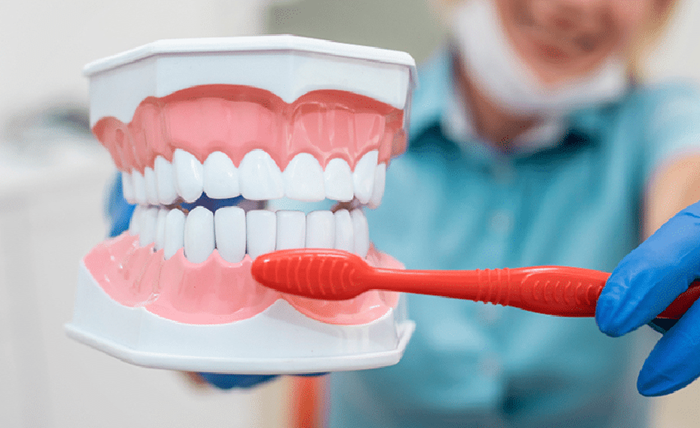
Many people brush every day and still get cavities. The problem is technique and time. You can fix both with coaching from your dentist.
Most dentists follow guidance from the Centers for Disease Control and Prevention and the American Dental Association. They focus on three simple skills.
| Home habit | What your family dentist teaches | Common mistake
|
|---|---|---|
| Brushing | Use a pea-sized amount of fluoride paste. Brush for two minutes, twice a day. Clean all tooth surfaces. | Rushing for 30 seconds. Scrubbing too hard. Missing the gumline. |
| Flossing | Slide the floss between teeth. Hug each tooth in a C shape. Move up and down under the gumline. | Snapping the floss. Only sliding in and out once. Skipping tight spots that feel hard. |
| Rinsing | Use a fluoride rinse if your dentist suggests it. Swish for the full time on the label. | Rinsing with water right after brushing. Cutting the time short. |
Your dentist can show these steps in the office. You can then repeat them at home with your children. Practice together in front of a mirror. Turn it into a shared routine, not a rushed chore.
Helping children build strong habits
Children learn by watching you. They also learn through clear rules and small rewards. A family dentist can give you a simple plan for each age.
- For babies: Wipe gums with a clean cloth. Do this before the first tooth appears.
- For toddlers: Use a tiny smear of fluoride paste. Help them brush. Do not let them swallow paste.
- For school-age children: Let them brush first. You finish the job so that they can tie their own shoes well.
Your dentist can also talk with your child about sugar, snacks, and sports drinks. Hearing the same message from a trusted adult in a white coat can carry weight. It can cut through peer pressure and ads.
Addressing fear, shame, and mixed feelings
Many adults avoid care because of fear or shame. Past pain, money stress, or harsh words from a former dentist can leave scars. A strong family dentist does not judge you. The focus stays on what you can do now.
During visits, you can expect three key supports.
- Plain talk about your mouth without blame
- Clear choices with facts on cost and results
- Step-by-step plans that match your budget and time
This calm approach helps you start fresh. It also shows your children that care is normal and safe.
Matching home care to your health needs
Not every mouth needs the same plan. A family dentist can adjust home steps based on your health, age, and medicines.
For example, if you have dry mouth from medicine, you face a higher risk for cavities. Your dentist may suggest more fluoride, sugar-free gum, or a different rinse. If you have braces, you may need special brushes and threaders.
The National Institute of Dental and Craniofacial Research explains how gum disease is tied to heart disease and diabetes. Your dentist can use this science to shape your home plan. You can then protect both your mouth and your body.
Using checkups to review your home routine
Every checkup is a chance to test your home care. Your dentist and hygienist can see where plaque builds up and where gums bleed. They can then show you small changes that make a big difference.
During each visit, ask three questions.
- Which spots am I missing at home
- What one change should I focus on this season
- Which products do you trust for my family
Write the answers on a card and tape it to your bathroom mirror. Keep the focus on one or two changes at a time. That keeps the plan simple enough to follow.
Turning your dentist’s advice into a family routine
You can turn guidance from your family dentist into steady habits with three steps.
- Pick a set time for brushing and flossing, such as after breakfast and before bed.
- Keep supplies in one easy basket. Include brushes, floss, rinse, and a small mirror for kids.
- Use a simple chart or calendar for children. Mark each morning and night with a sticker.
Over time, these small steps protect you from cavities, gum disease, and broken teeth. A family dentist repairs damage when needed. More importantly, that trusted guide teaches you how to care for your mouth at home, one clear habit at a time