
Why Cricket Remains One of the Most Popular Sports for Fans Worldwide
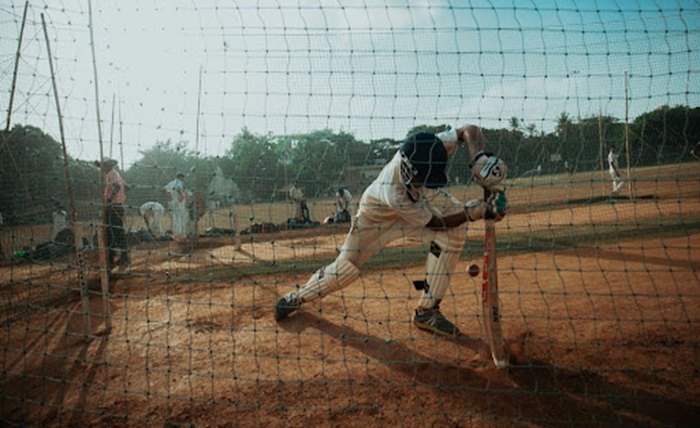
Cricket still draws people for the same reason the best long seasons do: it offers more than one rhythm and more than one way in. The ICC Men’s Champions Trophy final on 9 March 2025 saw India beat New Zealand by four wickets in Dubai, and the event later delivered 368 billion global viewing minutes across the tournament, the highest in the competition’s history. A year later, the India-England semi-final at the 2026 Men’s T20 World Cup produced 499 runs and set a digital record with 65.2 million peak concurrent viewers on JioHotstar. Those are not niche numbers. They belong to a sport that still commands whole days, short bursts, and everything between.
One game, three clocks
Cricket’s great advantage is structural. In the space of 11 days in June 2025, South Africa beat Australia by five wickets in the World Test Championship final at Lord’s, with Aiden Markram making 136 and Kyle Verreynne striking the winning run on the fourth morning, while the IPL final on 3 June ended with Royal Challengers Bengaluru beating Punjab Kings by six runs after defending 190. Formats matter. One match can turn on a field set around off stump and a batter leaving well for an hour; the next can swing when Krunal Pandya removes Prabhsimran Singh and Josh Inglis in a spell of 2 for 17 after Punjab had raced to 70 in eight overs.
The calendar never really empties
A fan can move from Lord’s to Bengaluru, from Dubai to Dallas, without waiting long for the next serious game. Major League Cricket staged its third season in the United States from 12 June to 13 July 2025, while The Hundred sold and issued 580,000 tickets across its 2025 season, with 23 percent junior tickets, 41 percent family buyers, and 30 percent female buyers. That matters because cricket is no longer tied to one television market or one old touring lane. The sport now lives on overlapping circuits, and each one teaches a different audience how to watch it.
Rivalries still do the heavy lifting
Some sports rely on format. Cricket also has fixtures that arrive with their own weather system. The India-Pakistan league match at the 2025 Champions Trophy in Dubai generated more than 26 billion minutes of watch-time on TV and drew 206 million live viewers on television, while the final between India and New Zealand reached 230 million viewers and 53 billion minutes of watch-time across TV and digital platforms. Those figures help explain why betting cricket keeps such a firm place in the wider sports economy: the scoreline can move slowly, but the pressure shifts ball by ball, over by over, spell by spell. A fan does not need to wait for the 48th over to feel the match turning; a wicket after drinks, a change to spin from one end, or a tighter line into the pitch can change the entire read.
The women’s game changed the map
Cricket’s global hold looks stronger now because the women’s game has stopped being treated as a side room. The ICC Women’s Cricket World Cup 2025 opened in Guwahati with 22,843 spectators for India against Sri Lanka, the highest attendance ever for a group-stage fixture at an ICC women’s event, and the first 13 matches of that tournament drew more than 60 million viewers with 7 billion minutes of watch-time. The India-Pakistan match on 5 October reached 28.4 million on digital platforms and became the most-watched women’s international cricket match in history. In England, The Hundred women’s competition drew 349,401 spectators in 2025, which the ECB described as a global record for total attendance at a women’s cricket competition.
The phone became the grandstand
The sport is still live in the stadium, but it is now organised around the second screen as well. During the India-England semi-final at the 2026 Men’s T20 World Cup, JioHotstar recorded 619 million views and a combined reach of more than 320 million across linear television and digital platforms, with watch time exceeding 23 billion minutes. Phones matter too. A supporter in Ahmedabad, Birmingham, or Lahore can now switch between clips, scorecards, and the best online betting apps on the same screen, then return to the stream without leaving the match behind.
It still rewards attention
Cricket survives every prediction of decline because it still gives different kinds of viewers a reason to stay. One fan wants Shubman Gill in a chase, another wants Kagiso Rabada with a second new ball, another wants Jasprit Bumrah at the death, and each of those moments has its own crowd and its own language. That range is hard to replicate. A sport that can hold 230 million viewers for a final in Dubai, fill Guwahati for a women’s opener, and keep drawing new fans in the United States before its Olympic return in Los Angeles in 2028 is not living on memory. It is still moving.