How to Use Black and White Rugs for Temporary Decor
Renting comes with a familiar frustration: you want a space that feels like yours, but nails, paint, and permanent fixtures are off the table. Personalizing a rental without risking your security deposit takes creativity, and that’s exactly where the right rug changes everything.
Black and white rugs offer renters one of the most flexible and stylish tools in temporary decorating. Their classic color palette means they work alongside virtually any existing furniture or wall color, whether you’re moving into a neutral apartment or a space with bold, dated finishes. Beyond aesthetics, they’re practical — easy to clean, simple to reposition, and effortless to pack when it’s time to move on.
This article walks you through everything you need to make the most of black and white rugs as a temporary decor solution. You’ll learn why these rugs are uniquely suited to rental living, how to choose between round and rectangular styles based on your layout, and how to use them strategically to define spaces and elevate your home’s overall feel. A step-by-step guide for renters covers everything from measuring and installation to cleaning and moving day — so you can decorate with confidence and leave without a trace.
The Versatility of Black and White Rugs in Temporary Decor
For renters, decorating is always a balancing act. You want a home that reflects your personality, but lease agreements limit what you can actually change. Furniture can only do so much, and wall art alone won’t transform a room. A well-chosen rug, however, can shift the entire atmosphere of a space — and black and white rugs do this better than almost any other option.
Why Black and White Rugs Work for Any Space
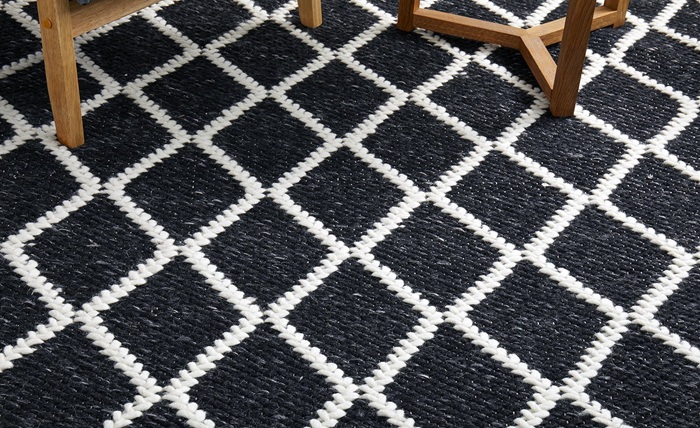
The appeal starts with the color palette. Black and white is genuinely neutral in a way that beige or gray isn’t — it doesn’t compete with bold furniture, doesn’t clash with warm wood tones, and doesn’t feel out of place against cool-toned walls. Whether your rental came with mismatched appliances, dated cabinetry, or aggressively beige carpeting in the adjacent room, a black and white rug on your living room floor creates a visual anchor that draws the eye and establishes order. Patterns amplify this effect considerably. Geometric designs add structure to a room that feels chaotic, while simple stripes can elongate a cramped space or direct foot traffic naturally through an entryway. A bold medallion pattern becomes an instant focal point, giving a sparse rental apartment the kind of intentional character that usually takes years to build.
Beyond aesthetics, these rugs are genuinely practical for high-traffic rental living. The contrast between black and white naturally camouflages everyday dirt and debris better than a solid light rug would, which means they hold up visually between cleanings. Most black and white rugs — whether flatweave, low-pile, or synthetic — are straightforward to spot-clean and maintain without professional help. Brands like Lahome offer a wide range of black and white styles in durable, easy-care constructions that are particularly well-suited to this kind of flexible, on-the-move lifestyle. They’re also easy to reposition when you rearrange furniture or move to a new unit entirely. That combination of visual impact, pattern variety, low-maintenance upkeep, and total portability makes black and white rugs one of the smartest investments a renter can make in their living space.
Choosing Between Round and Rectangular Rugs for Your Needs
Shape is one of the most overlooked decisions when selecting a rug, yet it dramatically affects how a room feels and functions. For renters working with fixed floor plans and furniture they didn’t choose, picking the right shape can mean the difference between a space that feels intentional and one that feels thrown together. Both round and rectangular black and white rugs have distinct strengths, and understanding when to use each one helps you decorate smarter without touching a single wall.
Round Rugs: Softening Angles and Creating Focal Points
Round rugs introduce something most rental apartments desperately lack: visual softness. Standard rental spaces tend to be boxy, with hard corners and predictable layouts that feel institutional rather than lived-in. A round black and white rug breaks that rigidity immediately. Placed beneath a circular dining table, it creates a unified, finished look that rectangular rugs can’t replicate as naturally. In a bedroom, centering a round rug under a pendant light or at the foot of the bed draws the eye inward and gives the room a sense of deliberate design. They’re particularly effective in small spaces where a large rectangular rug would feel overwhelming — a well-proportioned round rug fills the room without crowding it. Entryways benefit from round rugs too, as the shape naturally guides movement and creates a welcoming moment without requiring the rug to align perfectly with walls or doorframes.
Rectangular Rugs: Defining Traditional Zones and Enhancing Flow
Rectangular rugs remain the most practical choice for defining structured areas in a rental. In a living room, the standard approach is to place a rectangular rug so that at least the front legs of every sofa and chair rest on it — this visually pulls the seating group together into a cohesive zone without any permanent changes to the floor. For open-plan apartments where the living and dining areas bleed into each other, two separate rectangular rugs can establish distinct functional zones more clearly than any furniture arrangement alone. Sizing matters significantly here: a rug that’s too small looks like an afterthought, while one that’s correctly scaled makes the room feel larger and more considered. In hallways, a long rectangular runner directs movement naturally and protects high-traffic flooring — a practical bonus that landlords will appreciate when you move out.
Effective Decorating with Rugs to Define Open Layouts
Open-plan apartments present a unique decorating challenge for renters: without walls to separate living, dining, and working areas, the space can feel undefined and visually chaotic. Black and white rugs solve this problem elegantly, creating clear boundaries between zones without a single nail or paint stroke. The key is treating each rug as a room within a room — a defined territory that signals to anyone entering exactly what that area is for.
Placement Techniques for Maximum Impact
The most effective approach in an open layout is to assign one rug per functional zone and size each one appropriately for its purpose. In a combined living and dining space, a larger rectangular rug anchors the seating area while a smaller one sits beneath the dining table — the visual separation between the two rugs does the work that a wall would otherwise do. Proportion is everything here. A rug that’s too small for its zone makes furniture float awkwardly, undermining the whole effect. As a practical rule, your rug should be large enough that the primary furniture pieces in each zone either rest on it entirely or have their front legs on it. For entryways and transitional corridors, a runner-style rug directs movement and signals the boundary between zones before a visitor even reaches the main living area. Avoid overcrowding by leaving visible floor space between rugs — that gap reinforces the separation rather than creating visual clutter.
Layering is another technique worth considering, particularly in living areas where you want added texture and depth. Placing a smaller patterned black and white rug over a larger neutral one adds dimension without introducing new colors that might clash with existing furniture. This works especially well in rentals with wall-to-wall carpeting, where a rug on top defines a specific zone and gives the illusion of a more intentionally designed floor.
Combining Rugs with Other Temporary Decor Elements
Rugs work best when they’re part of a coordinated temporary decor strategy rather than a standalone solution. Pairing a bold geometric black and white rug with removable wall art that echoes its pattern creates visual continuity across the room, making the space feel designed rather than assembled. Portable floor lamps positioned at the edge of a rug reinforce the zone’s boundaries while adding warm light that contrasts beautifully with the rug’s graphic palette. Modular furniture — shelving units, stackable stools, freestanding room dividers — complements the rug’s zone-defining role without requiring any permanent installation. When everything in your temporary decor strategy is movable and cohesive, the result is a rental that feels genuinely curated. The black and white rug becomes the foundation that ties these elements together, giving the whole room a sense of intentional design that’s surprisingly easy to pack up and replicate in your next home.
Step-by-Step Guide to Temporary Rug Solutions for Renters
Knowing which rug to choose is only half the battle — the other half is executing your vision in a way that protects your deposit, suits your lifestyle, and makes moving day as painless as possible. This step-by-step process takes you from blank floor to finished room without a single permanent change.
Step 1: Assessing Your Space and Needs
Before purchasing anything, spend time measuring every room where you plan to use a rug. Note the dimensions of the floor area, the placement of existing furniture, and the natural traffic paths people take through the space. A living room with a clear walking lane between the sofa and the television needs a rug sized to accommodate that movement, not block it. Consider how each room functions throughout the day — a home office that doubles as a guest space benefits from a rug large enough to anchor a desk setup while still leaving room for a fold-out bed. Write down your measurements and sketch a rough layout before shopping, so you’re comparing rugs against real numbers rather than guessing.
Step 2: Selecting and Installing Rugs Without Damage
Once you’ve chosen your black and white rug, the installation step is where renters most commonly make mistakes. Never use double-sided tape directly on hardwood or laminate flooring — it can pull up finish when removed and may violate your lease. Instead, invest in a quality non-slip rug pad cut to match your rug’s dimensions. These pads grip both the floor and the rug underside without adhesive, preventing bunching and protecting the floor surface beneath. For rentals with wall-to-wall carpeting, look for rug pads specifically designed for carpet-on-carpet use, which use a different grip texture to stay in place. If you want to layer a rug over carpet, a thin flatweave black and white rug works best — it lies flat without creating a tripping hazard and can be repositioned freely as your layout evolves.
Step 3: Maintaining and Moving Your Rugs with Ease
Regular maintenance keeps your rug looking sharp and extends its lifespan across multiple moves. For flatweave and low-pile black and white rugs, weekly vacuuming on a low-suction setting prevents dirt from embedding in the fibers. Spot-clean spills immediately with a damp cloth and mild soap — the high-contrast pattern that makes these rugs so visually striking also makes stains easier to identify and treat before they set. When it’s time to move, roll the rug tightly from one end rather than folding it, which prevents permanent creasing. Secure the roll with a few strips of packing tape on the outside and store it horizontally if possible. Most black and white rugs in synthetic or flatweave construction — including many Lahome styles — are lightweight enough to transport in a standard vehicle without professional movers, making them genuinely portable investments that travel well from one rental to the next.
Decorating with Confidence: The Renter’s Case for Black and White Rugs
Black and white rugs are one of the most practical and visually powerful tools available to renters who want a home that feels genuinely theirs. Their timeless color palette adapts to virtually any existing furniture or wall color, while their variety of patterns — from geometric to striped to medallion — gives every space a sense of intentional character that’s hard to achieve through other temporary means.
Throughout this article, you’ve seen how to match rug shape to room function, with round rugs softening boxy layouts and rectangular ones defining structured zones in open-plan spaces. You’ve learned placement strategies that create clear visual boundaries without touching a single wall, and how to combine rugs with other portable decor elements for a cohesive, curated result. The step-by-step guide covers every practical concern — from measuring and damage-free installation to cleaning routines and moving day logistics — so nothing catches you off guard.
The best part is that none of this requires a long-term commitment. Every decision you make with a black and white rug is reversible, portable, and replicable in your next home. Start with one room, see how the rug transforms the space, and build from there. Your rental doesn’t have to feel temporary just because your lease is.