Why Choose an Automatic Tire Inflator with a Powerful Motor?
you’re running late for an important meeting, and as you walk to your car, you notice a tire that’s gone noticeably flat overnight. Or worse, you’re on a highway at dusk when that unsettling pull in your steering wheel signals trouble. These moments are stressful, potentially dangerous, and unfortunately more common than most drivers would like to admit.
Manual tire pumps have long been the traditional fallback, but anyone who has crouched on a roadside frantically pumping one knows how exhausting and time-consuming the process can be. A slow, underpowered pump during an emergency isn’t just frustrating — it’s a genuine safety hazard, leaving you exposed on the shoulder longer than necessary.
This is where the automatic tire inflator steps in as a practical, modern solution. At the heart of any quality inflator is a powerful motor, which determines how quickly and reliably your tires reach the correct pressure. Pair that with a compact design that tucks neatly into a glovebox, and you have a tool that delivers both convenience and confidence. This article explores why motor power matters, what features define reliable performance, and how the right inflator can transform a stressful roadside situation into a manageable two-minute fix.
The Critical Role of a Powerful Motor in Tire Inflation
When a tire loses pressure unexpectedly, every minute counts. Whether you’re stranded on a busy highway or parked in a dimly lit lot, the last thing you want is an inflator that wheezes through the job at a painfully slow pace. Motor power is the single most important factor separating a genuinely useful automatic tire inflator from one that merely looks the part. A powerful motor drives air into the tire quickly and consistently, cutting inflation time from potentially ten or more minutes down to two or three — a difference that matters enormously when your safety is on the line.
Mid-size cars and SUVs present a particular challenge. Their larger tire volumes demand sustained airflow, and underpowered motors often struggle to maintain consistent pressure output over the full inflation cycle. Worse, they tend to overheat, forcing you to pause mid-job and wait for the unit to cool before continuing. A motor built for the task maintains steady performance from start to finish without thermal shutdown interruptions, delivering the reliable performance drivers depend on in real-world conditions.
Benefits of High-Power Motors for Speed and Efficiency
The practical advantages of a high-power motor extend beyond raw speed. First, reduced inflation time directly shortens your exposure to roadside hazards — fewer minutes standing near traffic means meaningfully lower risk. Second, a strong motor maintains consistent pressure output throughout the cycle, so the gauge reading you see at the end actually reflects what’s in the tire rather than a fluctuating estimate. Third, the capacity to handle larger tire volumes without strain makes a powerful inflator genuinely versatile, serving compact cars, SUVs, and even light trucks from a single device. For drivers who prioritize fast inflation and dependable results, motor strength is non-negotiable.
Technical Insights: What Makes a Motor “Powerful”
Motor power in a tire inflator comes down to three interconnected factors: wattage, airflow capacity measured in liters per minute, and thermal durability. Higher wattage translates directly to greater mechanical force, enabling faster compression of air into the tire. Airflow capacity determines how much air the motor can move per minute, which governs real-world inflation speed more accurately than wattage alone. Thermal durability — achieved through quality windings, efficient heat dissipation, and robust housing — ensures the motor sustains that output without degrading over repeated use. Together, these characteristics define whether an automatic tire inflator delivers on its promises or fades under pressure.
Essential Features: Compact Design and Reliable Performance
A powerful motor only tells half the story. The other half is whether the inflator is actually with you when you need it. Too many drivers own a tire inflator that lives in the garage rather than the car — because it’s too bulky, too heavy, or simply too inconvenient to carry. A compact tire pump solves this problem by fitting neatly into a glovebox or tucking behind a seat, ensuring it’s always within reach rather than sitting uselessly at home during an emergency. Size and portability aren’t cosmetic considerations; they directly determine whether your investment pays off when it counts.
Reliable performance in varied conditions matters just as much as convenience. A tire inflator may sit unused for months before suddenly being called upon in freezing temperatures, intense summer heat, or a rain-soaked roadside. Quality construction — including durable housing materials, reinforced hose connections, and an accurate pressure gauge — ensures the device responds dependably regardless of how long it’s been stored or what conditions it faces. An inflator that reads pressure inaccurately is arguably worse than no inflator at all, since it creates a false sense of security while leaving tires improperly inflated.
Why Compact Size Matters for Car Owners
Drivers of mid-size cars and SUVs often underestimate how quickly trunk and cabin space fills up with everyday essentials. A compact tire pump respects that reality. When an inflator weighs under two pounds and fits in the palm of your hand, there’s no reason to leave it behind. This portability also benefits drivers who rent vehicles, carpool, or frequently switch between cars — the inflator travels with the person, not the vehicle. For road trips especially, having that device accessible in the glovebox rather than buried under luggage transforms a potential crisis into a brief, manageable stop.
Evaluating Reliability for Long-Term Use
Durability comes down to materials, engineering, and certifications. Look for inflators built with reinforced internal components and housings that resist impact and temperature extremes — both common in real-world storage conditions. For cordless models, battery longevity is critical; a unit that can fully inflate two or three tires on a single charge provides meaningful reassurance. Safety certifications from recognized testing bodies signal that the device has been independently verified to perform as claimed. These factors collectively determine whether your compact tire pump remains a reliable performance tool five years from now or becomes a drawer ornament after its first real use.
Addressing User Needs: Safety and Convenience on the Road
Every driver eventually faces a moment when tire pressure becomes an urgent problem rather than a routine maintenance item. The question isn’t whether it will happen, but whether you’ll be prepared when it does. An automatic tire inflator with a powerful motor and compact design directly addresses the two concerns that matter most in that moment: getting back to safe driving pressure quickly, and having the right tool actually on hand to do it. Bulky, underpowered equipment fails on both counts — it discourages daily carrying and delivers frustratingly slow results when emergencies strike.
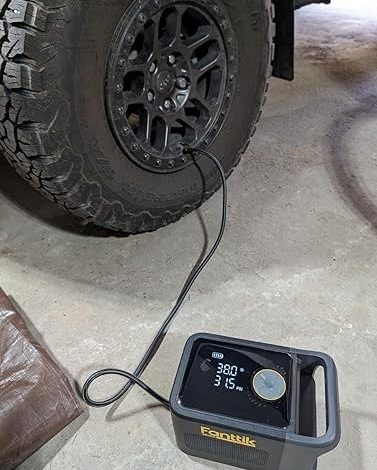
Modern inflators like those from Fanttik have redefined what drivers can reasonably expect from a portable pump. By combining strong motor output with a form factor small enough to live permanently in a glovebox, they eliminate the gap between owning a solution and having it available. The result is a device that genuinely earns its place as standard car equipment rather than an occasional-use garage tool.
Fast Inflation for Enhanced Safety in Emergencies
Speed during a roadside emergency isn’t just a convenience — it’s a measurable safety factor. Every additional minute spent outside a vehicle near moving traffic increases exposure to serious risk. A powerful motor that inflates a standard tire in two to three minutes rather than ten keeps that window of vulnerability as short as possible. Beyond emergency response, consistently maintaining correct tire pressure improves vehicle stability, reduces braking distances, and prevents the uneven wear that leads to blowouts. An inflator that delivers accurate, fast results supports all of these outcomes, turning a reactive emergency tool into a proactive safety asset that drivers use regularly.
Convenience of a Glovebox-Friendly Inflator
The most effective safety tool is the one you actually have with you. A compact inflator that weighs under two pounds and fits alongside registration documents and sunglasses removes every excuse for leaving it behind. There’s no need to call roadside assistance for a slow leak, no waiting for a passing stranger with a pump, and no hunting for a gas station air machine that may or may not be functional. For car owners who want hassle-free maintenance without sacrificing preparedness, a glovebox-friendly inflator represents the clearest possible upgrade over traditional alternatives — straightforward to store, simple to use, and ready the moment it’s needed.
Practical Solution: Step-by-Step Guide to Using Your Automatic Tire Inflator
Knowing you have a powerful, compact inflator in your glovebox is reassuring — knowing exactly how to use it under pressure is what actually gets you back on the road. The process is straightforward, but a few deliberate steps make the difference between a smooth two-minute fix and an avoidable mistake like over-inflation or a loose hose connection mid-cycle.
Preparation and Setup for Optimal Performance
Before attaching anything, check your inflator’s power source. For cordless models, confirm the battery has sufficient charge — ideally after every long trip or monthly if the vehicle sits idle. Plug-in models should have the cable untangled and ready before you approach the tire. Next, check the tire visually for any embedded objects like nails or glass; inflating a punctured tire without addressing the cause wastes time and pressure. Once satisfied, firmly thread the inflator’s hose connector clockwise onto the tire’s valve stem until snug — a loose connection bleeds air and skews your pressure reading. Finally, consult your vehicle’s door jamb sticker for the manufacturer-recommended PSI before touching any settings.
Inflation Process and Monitoring Tips
With the hose secured, set your target pressure on the inflator’s display using the adjustment controls — most automatic models allow you to dial in the exact PSI and will shut off automatically when reached. Start the motor and step back slightly to avoid the spinning components. Watch the gauge during inflation; if pressure climbs unusually fast or slow, pause and recheck the valve connection. Once the inflator stops automatically, verify the reading matches your target before disconnecting. Remove the hose with a swift, straight pull to minimize air loss. Replace the valve cap immediately to keep debris out. Store the inflator, coil the hose neatly, and return it to the glovebox so it’s ready for next time.
The Smart Choice for Driver Preparedness and Road Safety
A flat tire doesn’t have to mean a ruined morning or a dangerous hour on the roadside. The right automatic tire inflator — one built around a powerful motor and a genuinely compact design — turns what used to be a stressful ordeal into a brief, manageable task. Throughout this article, we’ve seen how motor strength directly determines inflation speed and consistency, how compact form factor ensures the device is actually with you when emergencies strike, and how these two qualities together address the real concerns drivers face: safety, convenience, and reliability.
Choosing an inflator isn’t just about having a backup plan. It’s about having the right backup plan — one that won’t overheat halfway through the job, won’t demand a dedicated storage bin, and won’t leave you second-guessing the pressure reading when you’re done. For car owners who drive mid-size vehicles, take regular road trips, or simply want to stop depending on gas station air machines, a quality automatic tire inflator is one of the most practical investments a driver can make. Preparedness isn’t complicated. It just requires having the right tool in the right place before you need it