
How is Biophilic Design Shaping Sustainable Office Spaces in Bangalore
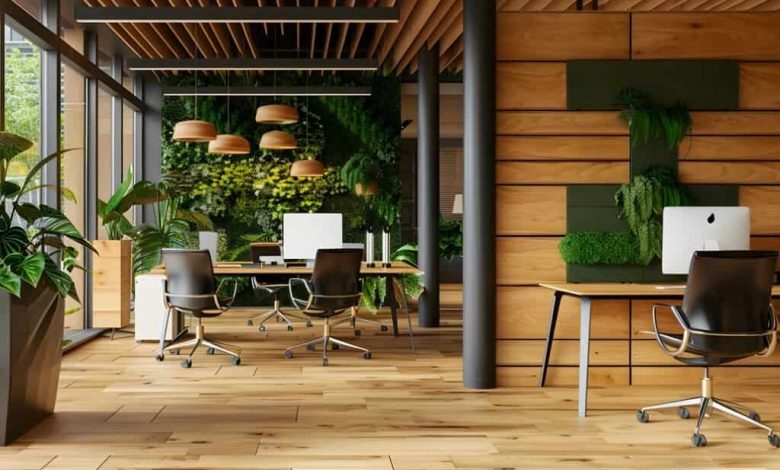
Walk through most office spaces in Bangalore today, particularly in areas like Koramangala, Marathahalli, or Bellandur, and the shift is hard to miss. More natural light. More open layouts. A visible attempt to bring the outside in.
At first, it looks like a design preference. Something visual.
But once teams start using these spaces every day, the impact becomes clearer. What seemed like an aesthetic choice starts influencing how the office functions. That is where biophilic design begins to move beyond design and into operations.
What is Biophilic Design in Modern Office Spaces?
Biophilic design, in simple terms, is about bringing natural elements into the workplace in a way that improves how people experience the space. In many Grade A office spaces, this usually translates into better access to daylight, use of indoor greenery, materials that feel less artificial, and layouts that allow for better airflow.
It is not just about adding plants or visual elements. When done properly, it starts affecting how comfortable the space feels across the day and how consistently teams can use it.
Why This Shift is Becoming More Visible
Across office spaces in Bangalore, especially in dense clusters like offices in Koramangala and Bellandur, workplace expectations have changed. Teams are larger. Workdays are longer. Hybrid models mean offices are used differently across the week. In that context, the office is no longer just functional. It has to support focus, collaboration, and retention at the same time.
Design choices begin to carry more weight. Natural light reduces dependence on artificial systems. Better ventilation improves comfort over longer hours. Even small additions like greenery in transition areas start affecting how people move and use the space. Not in obvious ways. But consistently.
From Design Feature to Operational Impact
There is a tendency to treat biophilic design as a visual upgrade. In practice, it behaves differently. In large-scale office operations, spaces that integrate natural elements tend to function more evenly. Employees spread out more. Certain zones do not get overused.
Breakout areas remain usable instead of becoming crowded at specific times. Even relatively small changes, like how light is distributed or where greenery is placed, can influence space usage patterns. It builds gradually. But it shows.
The Connection Between Biophilic Design and Sustainability
Biophilic design and sustainability often overlap, but they are not the same thing. Sustainability focuses on reducing environmental impact, energy use, waste, and resource efficiency. Biophilic design is more about how people experience that environment. Where they connect is in execution.
Better daylight reduces energy consumption. Improved airflow lowers dependency on mechanical systems. Material choices begin to serve both environmental and usability goals. Across office space in Marathahalli and Bellandur, this overlap is becoming more intentional.
Where Implementation Often Falls Short
The intent is usually there. Execution varies. In some offices, biophilic elements are added as surface features, such as plants near reception and a green wall in a breakout zone. But these are not integrated into how the space works.
Natural light exists, but layouts block it. Ventilation systems are present but not aligned with real usage patterns. Over time, the impact reduces. In many Grade A office spaces, the difference comes down to whether these elements are built into planning or added later.
A Practical View from Bangalore Offices
Consider two office setups in similar locations, say Koramangala. Both include biophilic elements. One focuses on visible design plants, textures, and feature areas. The other integrates these into planning desk placement aligned with daylight, airflow considered in layout, and shared areas positioned more deliberately.
Over time, the difference becomes noticeable.
One office looks better. The other works better.
That difference tends to show up in how consistently the space is used across the day.
The Role of Managed Office Environments
Managed office providers in Bangalore have started approaching this more systematically. In several office setups, especially in office spaces in Bellandur and Marathahalli, biophilic design is being considered early in planning rather than added later. This often includes better daylight planning, integrated greenery, and layouts aligned with ventilation systems. It does not solve everything. But it reduces friction.
Why Leadership Should Pay Attention
Biophilic design is often discussed as a design choice. In practice, it behaves more like an operational factor. It affects how spaces are used, how employees experience the workplace, and how systems perform over time.
In larger teams, even small improvements tend to compound. They influence retention. They influence productivity. They influence how often employees choose to come in. For leadership evaluating office spaces in Bangalore, these factors tend to matter more over time than initial design impressions.
Closing Perspective
Biophilic design is no longer just about how an office looks. It is increasingly about how the office performs. For companies considering office space in Koramangala, Marathahalli, or Bellandur. The focus should not be limited to visible elements but on how well these design choices hold up in daily operations. Because that is where the real value begins to show.