
Why Hybrid Camera Audio Outshines Blue Light Glasses for Students
Students today spend more time staring at screens than any previous generation. From morning lectures streamed on laptops to late-night study sessions on tablets, digital devices have become the backbone of modern education. This shift brings two persistent pain points: the eye strain caused by prolonged blue light exposure and the constant demand for clear, reliable audio during online classes, virtual study groups, and recorded lectures.
Many students reach for blue light glasses as a quick fix for screen fatigue, while separately juggling headphones or earbuds for audio needs. But is a single-function solution really enough for today’s complex learning environment? Managing multiple gadgets creates unnecessary friction in an already demanding academic life.
Enter Hybrid Camera Audio — an innovative all-in-one wearable that combines blue light filtration, Bluetooth audio, and HD recording into a single device. Rather than patching together separate tools, this technology addresses the full spectrum of a student’s digital needs simultaneously. This article explores why Hybrid Camera Audio is rapidly outpacing traditional blue light glasses as the smarter, more practical choice for students navigating the demands of modern education.
The Digital Student’s Dilemma: Balancing Eye Health and Audio Clarity
Walk through a typical student’s day and the pattern becomes clear: mornings start with lecture streams on a laptop, afternoons shift to collaborative sessions over video calls, and evenings stretch into hours of reading on a tablet or phone. Research consistently shows that college students average six to nine hours of screen time daily for academic purposes alone — a reality that places serious strain on both eyes and ears.
The two most pressing needs that emerge from this routine are blue light protection and reliable audio. Blue light blocking glasses have gained popularity as a response to the headaches, dry eyes, and disrupted sleep that accompany prolonged screen exposure. Meanwhile, clear Bluetooth audio has become equally non-negotiable for following fast-paced online lectures, participating in virtual study groups, and reviewing recorded course material.
The problem is that most students address these needs separately, reaching for blue light glasses with one hand and untangling earbuds with the other. Switching between devices mid-lecture, managing charging cables, and keeping track of multiple accessories fragments attention at precisely the moments when focus matters most. A student trying to absorb complex material shouldn’t also be troubleshooting audio dropouts or adjusting ill-fitting earphones. Fragmented tools create fragmented attention, and in an academic environment, that cost adds up quickly. A unified approach isn’t just a convenience — for today’s digitally immersed student, it’s a genuine academic advantage.
Limitations of Traditional Blue Light Blocking Glasses for Modern Learning
Blue light glasses do one thing: they filter a portion of the high-energy visible light emitted by screens, potentially reducing eye strain and improving sleep quality for students who study late into the night. For that narrow purpose, they work reasonably well. But modern student life demands far more than visual comfort, and this is precisely where traditional blue light glasses fall short.
The most obvious limitation is that blue light glasses have no relationship with sound. A student wearing them during an online lecture still needs separate earbuds or headphones to hear clearly, still needs a microphone for participation, and still needs to manage the tangle of cables or the battery life of yet another wireless device. The glasses themselves contribute nothing to the audio experience — they sit passively on the face while every other communication need goes unmet.
Recording capabilities are equally absent. When a professor moves through dense material quickly, being able to capture that content for later review is invaluable. Blue light glasses offer no mechanism for this. Students relying on them must still prop up a phone or open a screen-recording app, adding another layer of setup and distraction to an already demanding learning environment.
There’s also the issue of interactive digital environments. Virtual study groups, collaborative platforms, and hybrid classrooms require students to listen, speak, and engage simultaneously. A passive optical filter simply isn’t built for this kind of dynamic participation. As online and blended learning become permanent fixtures of higher education, the gap between what blue light glasses offer and what students actually need continues to widen. Single-function tools made sense for simpler times — today’s digitally immersed student has outgrown them.
What is Hybrid Camera Audio? A Comprehensive Tech Solution
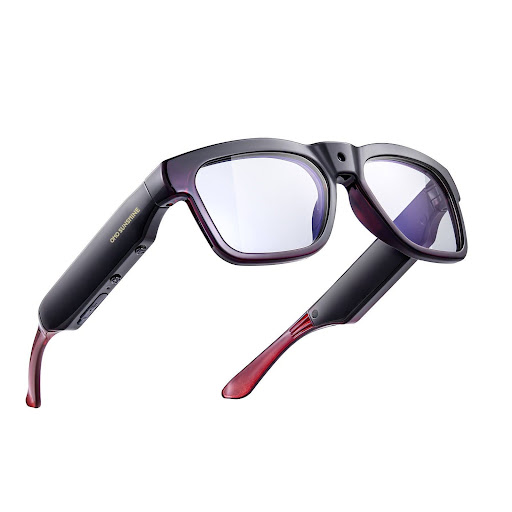
Hybrid Camera Audio represents a new category of smart eyewear designed specifically for the demands of modern, digitally intensive learning. Rather than addressing a single pain point, it consolidates multiple essential functions into one wearable device — blue light filtration, Bluetooth audio streaming, built-in microphones, and HD video recording. The result is a pair of glasses that does far more than protect your eyes; it actively participates in your learning environment.
At its core, Hybrid Camera Audio is engineered around three integrated systems working in concert. The frame houses miniaturized speakers and microphones positioned near the ears and temples, enabling hands-free audio without the bulk or cord management of traditional headsets. The lenses incorporate specialized coatings that filter high-energy blue light, reducing the cumulative eye strain that builds over long study sessions. Embedded within the frame is a compact HD camera, typically positioned at the bridge or temple, capable of capturing clear video and audio for lecture recording, note documentation, or content review.
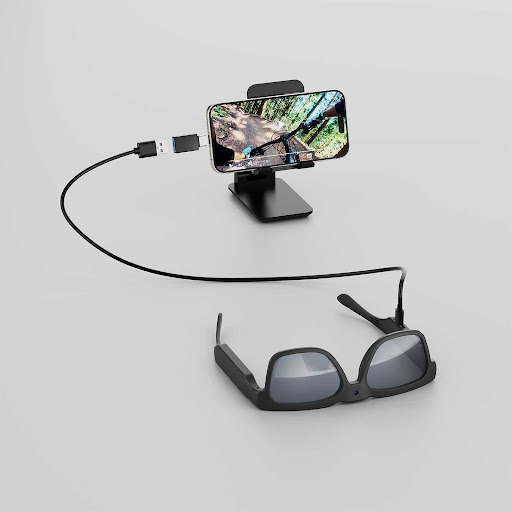
What distinguishes this technology from simply wearing glasses alongside earbuds is seamless integration. The Bluetooth connectivity pairs directly with laptops, tablets, and smartphones, allowing students to stream lecture audio, join video calls, and record sessions without touching a second device. Everything operates through one interface, often managed through a companion app that lets users adjust audio levels, toggle blue light intensity, and control recording functions. Brands like ohosunshine have been at the forefront of this space, developing smart eyewear that brings together optical quality and audio technology in a form factor students can comfortably wear all day.
Key Components: From Blue Light Filtration to HD Recording
The lens technology uses multi-layer coatings that selectively block wavelengths in the 380–450 nanometer range — the spectrum most associated with digital eye strain and sleep disruption. The integrated speakers deliver audio directly to the ears via open-ear acoustics, maintaining situational awareness while keeping sound quality sharp enough for detailed lecture content. The HD camera records at resolutions sufficient for capturing whiteboard content, screen shares, or face-to-face interactions, making it a practical tool for both passive review and active documentation. Together, these components don’t just coexist — they’re engineered to function simultaneously, so a student can listen to a lecture, protect their eyes, and record the session without any additional setup or switching between devices.
How Hybrid Camera Audio Solves Student Needs: A Feature Breakdown
Where blue light glasses stop at the lens, Hybrid Camera Audio keeps going. Each feature targets a specific friction point in the student learning experience, and together they eliminate the need to juggle multiple devices throughout the day.
Bluetooth Audio for Seamless Online Classes
The integrated Bluetooth audio system pairs directly with a laptop, tablet, or smartphone in seconds, delivering lecture content, group discussion audio, and video call sound through open-ear speakers built into the frame. Because the speakers sit near the ears rather than inside them, students maintain awareness of their surroundings — useful in library study rooms or shared spaces where complete audio isolation creates its own problems. The built-in microphones handle voice pickup cleanly, so participation in virtual classes or online study groups doesn’t require leaning toward a separate mic or fumbling with a headset. For students attending back-to-back online sessions, the hands-free setup means one less thing to adjust between classes.
HD Recording for Enhanced Study Sessions
The HD camera embedded in the frame captures what matters most during a lecture — whiteboard explanations, screen-shared slides, or a professor’s demonstration — without requiring a student to prop up a phone or open a separate recording app. Footage can be reviewed later at reduced speed, paused on complex diagrams, or shared with study group members who missed a session. This kind of on-demand review directly supports memory retention, particularly for dense technical material that benefits from repeated exposure. Combined with the blue light filtration lenses that reduce cumulative eye strain during those extended review sessions, Hybrid Camera Audio addresses the full learning cycle: capturing content in the moment and making it easier to absorb afterward.
Practical Steps to Integrate Hybrid Camera Audio into Student Life
Adopting a new piece of technology works best when it fits naturally into existing habits rather than demanding a complete routine overhaul. Integrating Hybrid Camera Audio into daily student life is straightforward, provided you approach it systematically.
Start by selecting the right device for your specific academic context. Prioritize battery life that covers your longest class day — most models offer six to eight hours of continuous use, which should span a full schedule of lectures and study sessions. Comfort matters equally; adjustable frame sizing and lightweight construction prevent the fatigue that comes from wearing any eyewear for extended periods.
Once you have a device, pairing it with your primary study tools takes under a minute. Navigate to your laptop or phone’s Bluetooth settings, select the device from the available list, and confirm the connection. Most models maintain memory for multiple paired devices, so switching between your phone and laptop requires only a quick toggle rather than repeating the full pairing process each time.
Next, calibrate the settings to match your environment. Through the companion app, adjust blue light filtration intensity based on ambient lighting — higher filtration for late-night sessions, lighter settings for daytime use in well-lit classrooms. Set audio levels to a comfortable baseline for lectures, then fine-tune microphone sensitivity for virtual participation.
Build HD recording into your lecture routine deliberately. Start a recording at the beginning of each class, then organize saved files by course and date immediately afterward to avoid a backlog. For maintenance, wipe lenses with a microfiber cloth daily — a practice familiar to anyone who has used quality eyewear from brands like ohosunshine — store the device in its case when not in use, and charge overnight to ensure full battery availability each morning.
The Smarter Choice for Today’s Digitally Immersed Student
The demands placed on today’s students are fundamentally different from those of any previous generation. Long hours in front of screens, constant participation in virtual classrooms, and the need to capture and review dense academic content have made single-function tools like traditional blue light glasses increasingly inadequate. They solve one problem while leaving the rest untouched — and in an environment where attention and efficiency are everything, that gap matters.
Hybrid Camera Audio closes that gap. By combining blue light filtration, Bluetooth audio streaming, and HD recording into a single wearable device, it addresses the full range of a student’s digital needs without the friction of managing multiple accessories. The result is a learning experience that’s sharper, more focused, and less interrupted — whether you’re attending a live lecture, joining a virtual study group, or reviewing recorded material at midnight before an exam.
The shift toward integrated technology isn’t a trend — it’s the logical response to how education actually works now. Students who adopt tools built for this reality gain a measurable advantage: less time troubleshooting gear, more time absorbing content, and better health outcomes from sustained screen use. Embracing Hybrid Camera Audio isn’t just a smart upgrade; it’s a practical investment in academic performance and long-term wellbeing.