Why Skin Hydration Needs More Than Moisturizers
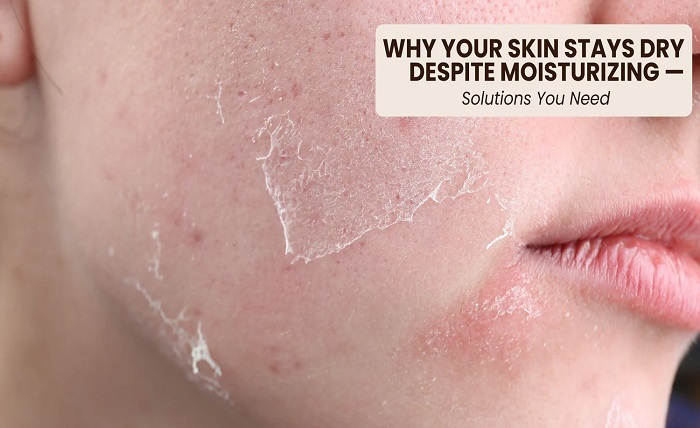
Skin can look shiny and still be thirsty. However, it is hard to realize depleted skin health, until aestheticians point that out. They reach for a richer cream, layer it on, wait a week, then wonder why the tightness is still there by noon, and the texture still looks a little tired.
A good hyaluronic acid serum changes that conversation because dehydration is not only about what sits on the skin’s surface. It is about water movement, barrier behavior, and how well the skin retains what it is given.
In fact, aestheticians tend to see this pattern quickly. The face feels flat, reactive, a bit papery maybe, but not necessarily dry in the classic sense.
What Matters More Than Moisturizing?
A moisturizer matters, obviously. Still, it is merely one part of a hydration strategy. Let’s say that water is low in the upper layers, and the barrier isn’t managing losses very well. In that case, a cream alone may soften the surface without correcting the deeper imbalance.
That is why skin can feel comforted for an hour and then go right back to feeling pulled, warm, or weirdly rough. The issue is not always a lack of oil. Often, it is a lack of water, and those are not the same problem.
Hyaluronic Acid Serum Is Only Part of the Hydration Story
With many users, there is a tendency to treat hydration like a single-step fix. People use one creamy formula, hope for the best, and move on. In fact, real skin does not work that neatly.
Water needs to be drawn in and distributed through the upper layers. Then, it is important to keep them from escaping too fast. That is where a layered system matters.
Basically, humectants pull water, while emollients soften and improve skin feel. Meanwhile, occlusives slow evaporation. When one piece is missing, the routine can feel incomplete even if the product lineup looks impressive on the shelf.
Hydration vs moisture actually becomes useful, rather than sounding like marketing filler. Hydration refers to water content. In general, moisture indicates oils and lipids that help reduce dryness and seal the surface.
Actually, dehydrated skin lacks water, while dry skin lacks oil. Many people have both. Also, plenty of people have dehydrated skin that is also acne-prone or reactive. This makes the wrong moisturizer a fast way to feel congested without ever feeling truly hydrated.
That mismatch is the whole story, really. Skin does not just need something heavy. Rather, it needs something intelligently built.
Hydration vs Moisture
| Skin State | What Is Missing | What It Looks Like | What Usually Helps Most |
| Dehydrated skin | Water | Tightness, dullness, fine surface lines, quick rebound after cleansing | Humectants, layered water-binding support, barrier reinforcement |
| Dry skin | Oil and lipids | Roughness, flaking, persistent discomfort, compromised softness | Emollients, lipid-rich creams, protective sealing steps |
| Dehydrated and oily skin | Water, despite active sebum flow | Shine with tightness, congestion with rough texture, uneven feel | Lightweight humectants, balanced barrier support, non-greasy finishing layer |
| Dehydrated and sensitive skin | Water plus weak barrier control | Stinging, redness, reactivity, patchy texture | Multi-weight HA, soothing support, measured occlusion |
Why Moisturizers Don’t Fix Dehydration
The better question is not whether moisturizers work. It is why moisturizers don’t fix dehydration on their own in so many routines.
Of course, a moisturizer reduces transepidermal water loss. Also, it softens the outermost layer and makes skin feel instantly more comfortable. However, if there isn’t enough water to begin with, sealing the surface is not enough. Actually, the skin still needs water-binding support underneath.
That is why multi-weight HA matters more than people think. Different molecular weights behave differently across the upper layers of skin. Smaller forms tend to interact more closely with superficial hydration pathways, while larger forms sit higher and help improve immediate softness and cushioning.
A formula built around multiple molecular weights does not rely on one single hydration trick. It creates a broader water-binding network. That tends to feel more believable on the skin. Less surface gloss, more actual bounce. Less temporary comfort, more sustained flexibility through the day.
What Aestheticians Usually Look For in Dehydrated Skin
Aestheticians usually do not diagnose dehydration by flaking alone. They watch how the skin behaves.
- Does it crease too quickly after cleansing?
- Does it become shiny but still feel taut?
- Do makeups catch on the surface even when oil is present underneath?
- Does the skin flush after exfoliation, which should have been tolerated just fine?
Those little things tell the story. Dehydrated skin mostly looks restless, not necessarily inflamed, but unsettled.
That is also why hyaluronic acid serum formulas need context. In fact, they help when the skin is tight, travel-worn, over-exfoliated, or simply under-supported.
However, the best results come when they are applied to slightly damp skin. Then, a moisturizer is important that fits the barrier state rather than overwhelming it.
If it is too light, the water slips away. However, if it is too heavy, the skin may feel smothered without improving resilience. The middle ground matters more than people want it to.
In fact, a well-designed booster formula using multi-weight HA, including three forms of hyaluronic acid at a meaningful concentration, can be especially useful here. Add a light cream afterward, and the skin often responds better than it would to a rich cream alone.
That kind of formula does not just sit on the face, making promises. It supports water retention in stages. It is practical, not flashy. Very often, that is what dehydrated skin responds to best.
A Smarter Hydration Routine Looks More Layered
A complete routine does not need ten products. Rather, it requires each step to do a different job without stepping on the others. If you want to hydrate, do the following:
- Start with a non-stripping cleanser. This way, the skin will not lose ground before hydration even begins.
- Apply a water-binding step while the skin is still slightly damp. Ideally, it might be a hyaluronic acid serum built with multiple molecular weights.
- Follow with a moisturizer matched to the barrier condition. Seasonal or skin-type labels do not work.
In the end, hydration behaves like a system. Essentially, when the cleanser is too aggressive, the skin becomes deficient. Moreover, when the humectant step is missing, the moisturizer has less to work with.
Sometimes, the final cream is too occlusive for the skin’s tolerance. Then comfort may improve, but texture can go sideways. Hence, the strongest routines are usually the most balanced.
Better Hydration Happens When Water Support and Barrier Support Meet
Dehydration is a functional problem. Hence, it is important to attract, hold, and protect water. This way, the skin will stay flexible, calm, and visibly healthier.
That is where hyaluronic acid serum earns its place. The formula uses multi-weight HA to support hydration across layers. Meanwhile, the moisturizer helps reduce surface loss.