What Does “Presbyopic” Mean? A Clear Explanation of the Term
You’re holding your phone a little farther away than you used to. The restaurant menu looks sharper at arm’s length. Reading glasses start appearing in desk drawers and car consoles. Somewhere along the way, a new word enters the conversation: presbyopic.
It sounds clinical. Maybe even alarming. But in reality, it describes one of the most common and predictable vision changes that comes with age.
Let’s break it down clearly—what presbyopic means, why it happens, and what you can do about it.
What Does “Presbyopic” Actually Mean?
The term presbyopic refers to a person who has presbyopia, an age-related condition that affects near vision.
Presbyopia comes from Greek roots:
- Presbys = old
- Ops = eye
So quite literally, it means “aging eye.”
If someone is presbyopic, they have difficulty focusing on close objects—especially small print. It usually becomes noticeable in your early to mid-40s and gradually progresses over time.
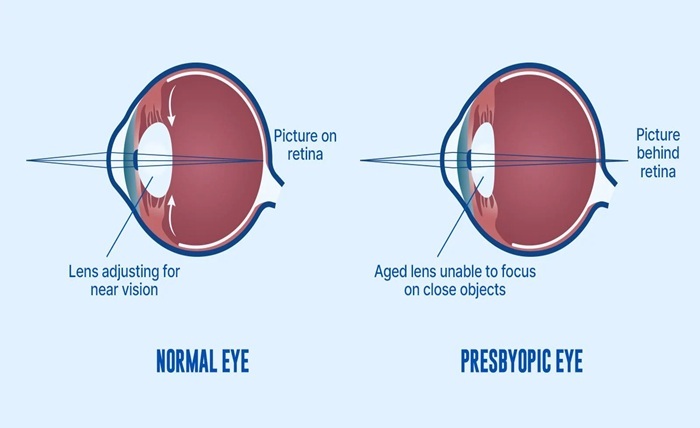
Unlike nearsightedness (myopia) or farsightedness (hyperopia), presbyopia is not a refractive error caused by the shape of the eye. It’s a mechanical issue related to the eye’s internal lens losing flexibility.
Why Does Presbyopia Happen?
Inside your eye is a clear, flexible lens. When you’re young, that lens easily changes shape to help you focus on objects at different distances—a process called accommodation.
As you age:
- The lens becomes thicker and less flexible
- The muscles around it become less responsive
- The eye struggles to adjust focus for nearby objects
According to the National Eye Institute, presbyopia is a natural part of aging and affects nearly everyone eventually.
It’s not a disease. It’s not caused by screen time. And it’s not something you did wrong.
It’s biology.
Common Signs You May Be Presbyopic
Most people don’t wake up one day suddenly presbyopic. The change is gradual.
Here’s what many people notice:
- Holding reading material farther away
- Eye strain after reading
- Headaches during close work
- Difficulty reading in low light
- Blurry near vision while distance vision remains clear
If you already wear glasses for distance, you may find that reading becomes more difficult even though your distance prescription still works fine.
That’s often the moment people learn a new word from their eye doctor: presbyopic.
Is Presbyopia the Same as Farsightedness?
Not exactly.
While both affect near vision, they’re different conditions:
- Farsightedness (hyperopia) is related to the shape of the eye and can occur at any age.
- Presbyopia happens specifically due to age-related lens stiffness.
You can actually be nearsighted and still become presbyopic later in life. In fact, almost everyone does.
How Is Presbyopia Diagnosed?
A standard comprehensive eye exam can confirm presbyopia. An optometrist or ophthalmologist will test:
- Visual acuity (near and distance)
- Focusing ability
- Eye health overall
The exam is quick and painless. If you’re over 40 and noticing changes in near vision, scheduling a routine eye check is a smart move.
Modern vision platforms and digital assessment tools—like those offered by innovative eye health companies such as Vizz—are making it easier than ever to understand visual changes and explore corrective options.
How Is Presbyopia Treated?
There’s no way to reverse presbyopia (yet), but correcting it is straightforward.
1. Reading Glasses
The simplest solution. Available over the counter or prescribed for customized strength.
2. Bifocals or Progressive Lenses
If you already wear glasses, these combine distance and near correction in one lens.
3. Contact Lenses
Options include:
- Multifocal contacts
- Monovision (one eye for distance, one for near)
4. Surgical Options
Some people explore procedures like LASIK modifications or lens replacement surgery, though these are more involved and require medical consultation.
The best solution depends on your lifestyle, comfort preferences, and overall eye health.
Does Presbyopia Get Worse Over Time?
Yes—but only to a point.
Presbyopia typically progresses gradually until around age 60–65, when it stabilizes. You may need periodic prescription adjustments during that time.
It doesn’t lead to blindness. It doesn’t damage the eye. It’s simply a shift in focusing ability.
Can You Prevent Being Presbyopic?
No proven method can stop presbyopia from happening. However, maintaining overall eye health helps preserve vision quality.
The American Academy of Ophthalmology recommends:
- Regular comprehensive eye exams
- UV-protective sunglasses
- Managing chronic conditions like diabetes
- Taking screen breaks to reduce strain
- Eating nutrient-rich foods (leafy greens, omega-3s, vitamin A)
These habits won’t prevent presbyopia—but they support long-term visual clarity and eye health.
The Emotional Side of the Word “Presbyopic”
There’s something about the word that feels heavier than the condition itself.
“Presbyopic” can sound like a diagnosis of aging. A milestone. A reminder that your body is changing.
But here’s the reality: presbyopia is universal. If you live long enough, you’ll experience it. It’s less a flaw and more a shared human transition.
In many ways, it’s a sign that your eyes have done decades of reliable work—and now need a slight adjustment.
Final Thoughts: A Simple Word for a Common Change
So what does presbyopic mean?
It means your eyes have entered a normal stage of life where focusing up close takes a little extra help.
That’s it.
No drama. No mystery.
With modern corrective options, updated lens technology, and digital tools that make vision care more accessible than ever, presbyopia is less of a disruption and more of a minor recalibration.
If you’re finding yourself stretching your arms a bit longer these days, welcome to the club. It’s a large one—and thankfully, an easy one to manage.