
How to Find the Best Gaming Chair for Adult Gamers

Gaming has evolved far beyond a teenage pastime. Today, millions of adults spend hours each week immersed in competitive matches, open-world adventures, or casual sessions that stretch well into the night. What many don’t realize until it’s too late is that the chair beneath them can make or break the entire experience. Prolonged gaming puts real physical demands on the body — hunched shoulders, compressed spines, and aching lower backs are all too familiar complaints among dedicated players.
The wrong seating choice doesn’t just cause discomfort; it actively undermines focus, reaction time, and long-term health. A standard office chair or worn-out couch simply wasn’t designed for the sustained, dynamic posture that gaming demands. That’s where purpose-built gaming chairs come in — but not all of them deliver on their promises.
This guide cuts through the marketing noise to help adult gamers make a genuinely informed decision. From understanding ergonomic fundamentals to evaluating materials, adjustability, and how your chair fits into a broader setup, you’ll find actionable steps to identify the chair that truly supports your body, your space, and your gaming goals.
Why Ergonomics Matter: The Foundation of Gaming Chairs for Adults
Sit in the wrong chair for two hours and your body will tell you about it. Sit in it for two years and the consequences become far harder to reverse. Adult gamers face a unique physical challenge: unlike casual players who drop in for thirty minutes, dedicated adults often log multiple hours per session, several days a week. That sustained posture — leaning slightly forward, neck craned toward a monitor, arms reaching for a keyboard — creates cumulative strain on the lumbar spine, hip flexors, and cervical vertebrae.
Ergonomics isn’t just a buzzword furniture brands attach to justify higher price tags. It’s the science of designing equipment around how the human body actually functions. A properly ergonomic gaming chair for adults keeps your spine in its natural S-curve, reduces pressure on intervertebral discs, and positions your arms so shoulder muscles aren’t constantly bracing against gravity. The practical result? Less fatigue, sharper focus during late-game moments, and fewer mornings where you wake up stiff from the previous night’s session.
Adult gamers also have distinct needs compared to younger players whose bodies recover more readily. Metabolism slows, muscle recovery takes longer, and pre-existing conditions like mild scoliosis or desk-job tension compound the problem. A chair built with genuine ergonomic intent — not just racing-seat aesthetics — addresses these realities directly, making it an investment in both gaming performance and long-term physical health.
Key Features to Look for in High-Quality Gaming Chairs
Not every chair marketed as a “gaming chair” actually delivers what serious adult players need. The category has exploded with options ranging from genuinely engineered seating to rebranded office furniture dressed up with racing stripes. Knowing which features actually move the needle — and which are purely cosmetic — saves both money and physical discomfort down the line. Three areas define whether a gaming chair earns its place in a serious setup: lumbar support and adjustability, material and build quality, and comfort-focused design elements like armrests and padding.
Lumbar Support and Adjustability for Optimal Posture
Fixed lumbar pillows are a starting point, but adjustable lumbar systems — ones that let you shift height and depth independently — are what actually match your spine’s unique curve. Look for chairs with seat height adjustment spanning at least a 4-inch range, a recline that locks at multiple angles (ideally between 90° and 135°), and a tilt tension mechanism you can tighten or loosen based on your weight. These aren’t luxury additions; they’re the baseline for keeping your lower back supported across multi-hour sessions.
Material, Build Quality, and Durability
The chair’s surface material directly affects both comfort and longevity. Breathable mesh panels prevent heat buildup during long sessions, making them ideal for warmer environments. PU leather offers a premium look and easy cleaning but traps heat and can crack over time without proper care. Memory foam padding conforms to your body better than standard high-density foam but adds cost. For the frame, steel construction significantly outlasts plastic alternatives — check that the base and seat pan are steel-reinforced before committing to any model.
Comfort Enhancements: Armrests, Padding, and Swivel
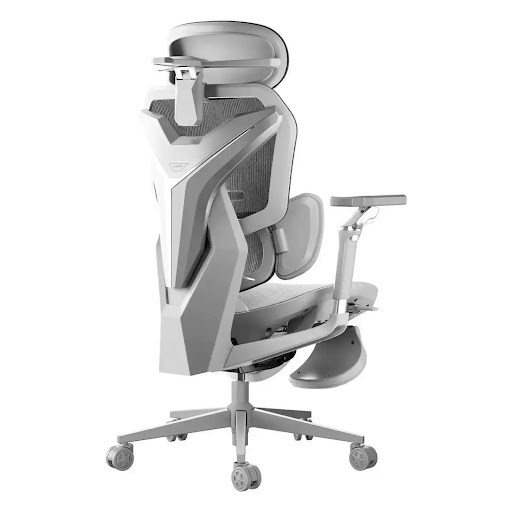
4D armrests — adjustable in height, width, depth, and angle — eliminate the shoulder tension that fixed armrests create by letting you position your arms exactly where your body needs them. High-density foam padding in the seat pan prevents the “bottoming out” feeling that cheaper chairs develop within months. A smooth, 360-degree swivel base with a sturdy caster set rated for your weight keeps movement effortless, reducing the micro-adjustments that quietly drain energy over a long gaming session.
Step-by-Step Guide to Choosing Your Perfect Gaming Chair
Knowing what features matter is only half the battle. Translating that knowledge into an actual purchase requires a structured approach — especially when the market offers hundreds of options across wildly different price points. Follow these steps to cut through the noise and land on a chair that genuinely fits your life.
Start by setting a realistic budget with a clear-eyed view of value. A $150 chair and a $500 chair are not the same product with different branding — the gap usually reflects real differences in foam density, frame materials, and adjustment range. Decide upfront what you’re willing to spend, then focus exclusively on chairs that deliver the most critical ergonomic features within that range rather than chasing cosmetic upgrades.
Next, measure your space before falling in love with any model. Check the chair’s footprint, seat height range, and recline depth against your actual desk setup. A chair that reclines 135 degrees is useless if your desk is positioned against a wall with no clearance behind it.
Body type and weight capacity deserve serious attention. Most standard gaming chairs are engineered for users under 250 pounds and between 5’4″ and 6’2″. If you fall outside those ranges, look specifically for chairs rated to your weight and offering extended seat depth or wider seat pans — manufacturers increasingly offer these variants, but they require deliberate searching.
If you have any opportunity to test a chair in person — at a showroom, a friend’s setup, or a gaming café — take it. Sit for at least fifteen minutes and pay attention to where pressure builds. No specification sheet replaces direct physical feedback.
Finally, read verified long-term reviews rather than first-impression unboxings. Look specifically for comments about foam compression after six months, armrest durability, and whether the recline mechanism holds its position reliably. These details reveal how a chair actually performs once the novelty wears off.
Building a Complete Setup: Gaming Chairs, Ergonomic Desks, and Accessories
A great gaming chair doesn’t exist in isolation. Even the most ergonomically advanced seat loses much of its benefit when paired with a desk at the wrong height or a monitor positioned too far away. Adult gamers who invest in quality seating often find that the chair exposes weaknesses elsewhere in their setup — suddenly the desk feels too high, the monitor angle causes neck strain, or cable clutter forces awkward reaching. Treating your gaming environment as an integrated system rather than a collection of independent purchases is what separates a genuinely comfortable setup from one that’s merely expensive.
Pairing Your Chair with an Ergonomic Desk for Synergy
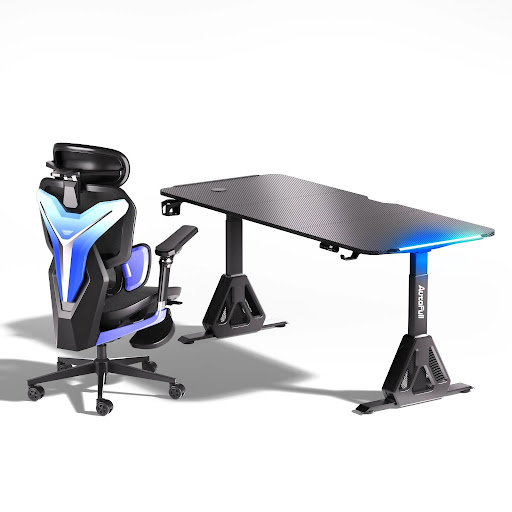
Height-adjustable desks are the natural complement to a well-fitted gaming chair because they let you align the work surface precisely to your seated elbow height — typically the point where your forearms rest parallel to the floor. Beyond height, look for desks with built-in cable management channels to eliminate the reaching and twisting that undermines even perfect chair positioning. A surface deep enough to push your monitor back 20 to 30 inches from your eyes completes the ergonomic triangle between chair, desk, and screen. Brands like AutoFull, which operate across the interior furniture space, have increasingly recognized this intersection, offering coordinated desk and chair solutions designed to work together as a unified ergonomic environment.
Essential Gaming Accessories to Elevate Performance
Once chair and desk are dialed in, a few targeted accessories close the remaining gaps. A monitor arm replaces fixed stands to let you fine-tune screen height and tilt independently of desk surface space. A keyboard tray mounted below the desk surface can drop your typing position lower than the desktop allows, reducing shoulder elevation during long sessions. Bias lighting behind the monitor reduces eye strain in darker rooms, and a quality headset stand keeps peripherals organized without forcing awkward arm angles to reach them.
Top Recommendations and Brands for Premium Gaming Gear
The gaming chair market has matured enough that a handful of brands consistently rise above the noise through genuine engineering rather than marketing spend. Secretlab has built a strong reputation among adult gamers for its dense cold-cure foam, robust recline mechanisms, and a sizing system that actually accounts for different body types. Herman Miller’s collaboration with Logitech G produced the Embody Gaming Chair — a product that brings genuine office ergonomics research into a gaming context, making it a compelling option for players who spend equal time working and gaming at the same desk.
For those seeking strong value without sacrificing core ergonomic features, Noblechairs and Corsair both offer mid-range models with steel frames, 4D armrests, and adjustable lumbar systems that outperform their price points. DXRacer, while one of the original gaming chair brands, now competes primarily in the entry-level space — adequate for occasional use but less suited to daily multi-hour sessions.
When weighing budget against premium options, the clearest dividing line is foam quality and frame construction. Entry-level chairs under $200 typically use lower-density foam that compresses within a year and plastic-reinforced bases that flex under sustained weight. Mid-range options between $300 and $500 represent the sweet spot for most adult gamers, delivering durable materials and meaningful adjustability without the diminishing returns of flagship pricing. Above $500, you’re largely paying for premium upholstery, brand prestige, or specialized ergonomic research — worthwhile for daily heavy users, but not essential for everyone.
Make a Deliberate Choice for Long-Term Comfort and Performance
Finding the right gaming chair as an adult isn’t about chasing the flashiest design or the most recognizable brand name — it’s about understanding what your body actually needs during sustained play and matching that to a chair built to deliver it. Ergonomics form the foundation: a chair that keeps your spine in its natural curve, reduces pressure on your lower back, and positions your arms without creating shoulder tension will always outperform one that looks impressive but ignores how the human body works over hours of use.
From there, the key features — adjustable lumbar support, quality materials, durable frame construction, and 4D armrests — separate chairs that genuinely support you from those that simply market themselves as gaming products. Pairing your chair with a height-adjustable desk and targeted accessories like monitor arms and keyboard trays transforms individual pieces into a cohesive, ergonomically sound environment.
The investment is real, but so are the returns: less physical discomfort, sharper focus during critical gaming moments, and a setup that holds up over years rather than months. Use the steps in this guide to assess your space, your body, and your budget — then make a deliberate choice rather than a reactive one. Your best gaming sessions are still ahead of you, and the right chair helps ensure your body is ready for them.