
The Hidden Role of Packaging in Supply Chain Efficiency
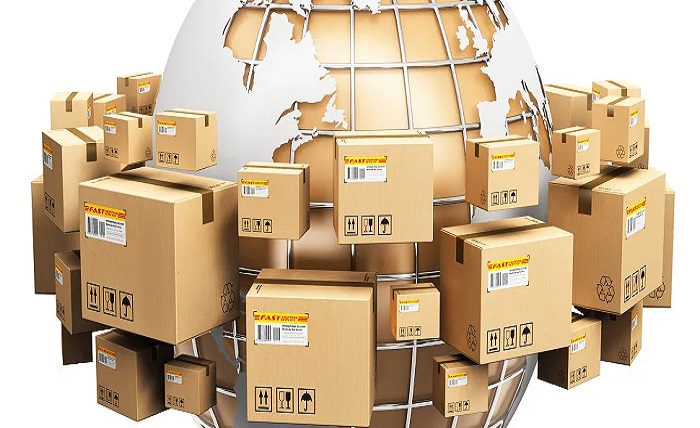
When people talk about improving supply chain performance, the focus usually lands on logistics, software, and cost control. Faster routes, better systems, lower freight rates. That all makes sense. But there’s one element that quietly shapes how every step performs, and it rarely gets the attention it deserves.
Packaging.
Too often, it’s treated as a basic, interchangeable commodity. Something that simply holds the product and moves it from point A to point B. But that mindset often leads to unnecessary damage, wasted space, and slower operations.
That’s why more businesses are starting to work with experienced partners like EONSEN Pack, a trusted flexible packaging manufacturer in China since 2004, to rethink how packaging fits into their supply chain strategy.
In reality, packaging, especially flexible packaging, is a design decision. And when done right, it becomes a powerful tool for reducing losses, improving space utilization, and keeping the entire supply chain running efficiently.
Reducing Risk: How Packaging Prevents Costly Damage
Let’s start with one of the most immediate impacts.
Shipping is rarely as smooth as it looks on paper. Products face constant vibration, stacking pressure, sudden drops, and changes in humidity, especially during long-distance transport. Without the right protection, it doesn’t take much for damage to happen.
And the cost goes far beyond the product itself. Returns, replacement shipments, delays, and frustrated customers all add up quickly. That’s why packaging should be seen as a protective system, not just a container.
That’s where flexible packaging stands out. With multi-layer structures, it offers both cushioning and barrier protection, while also being tailored to specific shipping conditions, whether for export logistics or local delivery.
Take FIBCs, for example. These bulk bags are designed for high load capacity, strong tear resistance, and reliable structure, making them far more dependable for transporting large volumes without breaking or leaking. Manufacturers like EONSEN Pack often engineer these solutions based on specific transport risks rather than using one-size-fits-all designs.
Because once products arrive damaged, everything else in the supply chain stops mattering.
Making Space Work: Storage and Shipping Efficiency
In warehousing and logistics, you’re not really paying for space, you’re paying for wasted space. And that often comes down to packaging.
Carriers typically calculate costs using dimensional weight, which means you’re charged based on how much space your shipment takes up, not just how heavy it is. So when packaging is oversized or poorly designed, you end up paying to ship air.
Flexible packaging offers a clear advantage here. It can be designed around the actual product, reducing excess volume and making palletizing far more efficient. Instead of working around rigid shapes, you’re using space more intentionally.
A good example is baffled FIBCs. Unlike standard bulk bags that bulge when filled, baffled designs maintain a square shape. That improves stacking stability and allows better use of container and warehouse space.
When space is used better, fewer shipments are needed. Saving space is important. But in most operations, speed is where the biggest gains show up.
Speed Matters: Packaging and Operational Throughput
Here’s something most operations teams already know: slow handling leads to higher costs. And more often than not, packaging plays a bigger role in that than expected.
Think about how much time is spent filling, sealing, moving, and reopening packages across a typical workflow. If the packaging isn’t designed for efficiency, those extra seconds start stacking up quickly. It impacts not just labor, but overall throughput.
Flexible packaging helps remove those inefficiencies. It’s lightweight, easier to handle, and can be designed to work seamlessly in both manual and automated environments. Consistency in size and structure also becomes critical, especially when machines are involved.
Take custom roll stock used in automated Form-Fill-Seal lines. Instead of handling individual units, the process becomes continuous. That reduces manual effort and keeps production moving at a steady pace. Many large-scale manufacturers, including EONSEN Pack, focus heavily on this kind of integration to support high-speed production environments.
At the end of the day, packaging should support your system, not slow it down.
A Smarter Approach: Evaluating Packaging Strategically
Once you start seeing these impacts, the next step is looking at packaging more strategically.
By this point, it’s clear that packaging does a lot more than just hold a product. But here’s where many businesses still fall short. Packaging decisions are often made in isolation, separate from logistics, procurement, or operations.
That disconnect often shows up later as higher costs and inefficiencies.
A better approach is to bring packaging into supply chain discussions early. Look at where damages are happening. Pay attention to bottlenecks in handling or storage. And most importantly, don’t focus only on unit cost.
This is where the idea of total cost of ownership really matters. A cheaper option might seem like a win upfront, but if it leads to more damage, slower processes, or wasted space, it quickly becomes more expensive.
So it’s worth asking: is your packaging actually helping your operations, or quietly holding them back?
Conclusion
At a glance, packaging might seem like a small detail in a much larger system. But when you look closer, it plays a direct role in how efficiently that system runs. It’s not just about protection anymore, it’s about performance.
Less damage, better use of space, and faster operations all tie back to how packaging is designed. That’s where flexible packaging stands out as a practical, modern solution.
When businesses set out to improve their supply chains, they often start with systems or transportation. But in many cases, the real opportunity is much simpler, and much closer than expected.
And more often than not, it starts with something as simple as the packaging.