
Helping Your Readers Navigate the Old vs. New Tax Regime for FY 2025-26
You’re sitting with your HR manager in April 2025, filling out the tax declaration form for the upcoming financial year. The form asks a simple question: “Old Tax Regime or New Tax Regime?”
You hesitate. Last year, your colleague confidently chose the new regime and ended up paying ₹40,000 more in tax than if he’d stayed with the old regime. Another colleague did the opposite, stuck with the old regime out of habit, and later realized she could have saved ₹1.2 lakh by switching to the new regime.
This isn’t a theoretical decision. It’s a choice that directly impacts how much money stays in your bank account versus going to the government. For someone earning ₹15 lakh annually, choosing the wrong regime can cost ₹1-1.5 lakh in unnecessary taxes. That’s three months of rent. That’s a family vacation. That’s your child’s annual school fees.
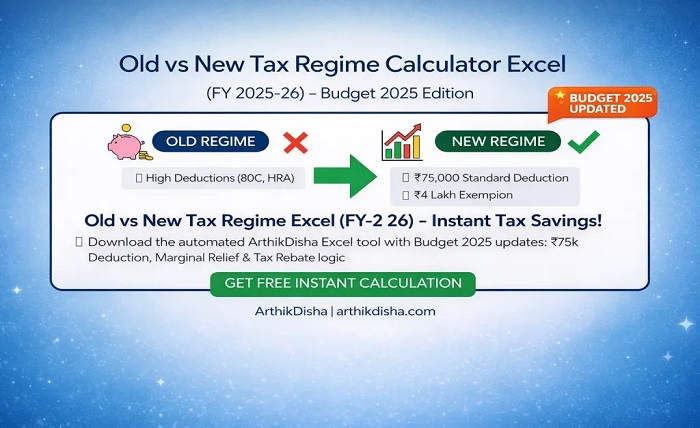
As we approach FY 2025-26, Indian taxpayers face this critical choice with higher stakes than ever. The 2025 Union Budget introduced transformational changes: a higher standard deduction of ₹75,000, a full tax rebate for income up to ₹12 lakh, and restructured tax slabs that fundamentally alter the math.
The decision is no longer straightforward. It depends entirely on your investment habits, eligible deductions, salary structure, and financial goals. This guide walks you through the exact framework to make the right choice for your specific situation.
Understanding the Two Regimes: What Actually Changed in Budget 2025
Before diving into which regime is better for you, let’s understand what each regime actually offers and what changed in the February 2025 Union Budget.
The New Tax Regime: Simplicity with Lower Rates
The new tax regime, introduced in 2020 and made the default option from FY 2023-24 onward, operates on a philosophy: lower tax rates in exchange for giving up most deductions and exemptions.
Budget 2025 made this regime significantly more attractive with three major changes:
- Increased Standard Deduction to ₹75,000
Previously ₹50,000, the standard deduction is now ₹75,000 for all salaried employees and pensioners. This is automatic—you don’t need to claim it or provide documentation. Your employer applies it when calculating your taxable salary.
Practical impact: If your gross salary is ₹12 lakh, your taxable income automatically reduces to ₹11.25 lakh after applying the ₹75,000 standard deduction.
- Massive Rebate Expansion Under Section 87A
This is the game-changer. The income threshold for full tax rebate jumped from ₹7 lakh to ₹12 lakh. If your taxable income (after standard deduction) is ₹12 lakh or less, you pay zero tax—your entire tax liability is rebated.
Combined with the ₹75,000 standard deduction, this means salaried employees earning up to ₹12.75 lakh gross salary pay absolutely zero income tax under the new regime.
The rebate amount itself increased from ₹25,000 to ₹60,000. This benefits an estimated one crore taxpayers who were previously paying ₹20,000-80,000 in annual taxes.
- Restructured Tax Slabs with Higher Thresholds
The tax slabs were completely revamped:
Up to ₹4 lakh: 0% (increased from ₹3 lakh exemption limit)
₹4-8 lakh: 5%
₹8-12 lakh: 10%
₹12-16 lakh: 15% (new slab)
₹16-20 lakh: 20% (new slab)
₹20-24 lakh: 25% (new slab)
Above ₹24 lakh: 30%
The critical change: the 30% tax rate now applies only above ₹24 lakh. Previously, it kicked in at ₹15 lakh. This massive shift creates substantial tax savings for everyone earning between ₹15-24 lakh annually.
What You Give Up in the New Regime:
In exchange for these lower rates and higher thresholds, you cannot claim most common deductions:
- No HRA (House Rent Allowance) exemption
- No Section 80C deductions (PPF, ELSS, life insurance, tuition fees, home loan principal)
- No Section 80D (medical insurance premium)
- No home loan interest deduction on self-occupied property
- No LTA (Leave Travel Allowance) exemption
- No professional tax deduction
You retain only: the ₹75,000 standard deduction, employer’s NPS contribution (Section 80CCD(2)), and home loan interest on let-out (rented) property.
The Old Tax Regime: Deductions Galore, Higher Rates
The old tax regime, which existed before 2020, follows the opposite philosophy: higher tax rates but extensive deductions and exemptions available.
Budget 2025 made ZERO changes to the old regime. The slabs remain identical to FY 2024-25:
Up to ₹2.5 lakh: 0%
₹2.5-5 lakh: 5%
₹5-10 lakh: 20%
Above ₹10 lakh: 30%
You also get a ₹50,000 standard deduction (not ₹75,000 like the new regime).
Section 87A rebate applies: if your taxable income (after all deductions) is ₹5 lakh or less, you get a rebate of ₹12,500, effectively making income up to ₹5 lakh tax-free.
What You Retain in the Old Regime:
All traditional deductions and exemptions:
- HRA exemption (can save ₹2-3 lakh in taxable income for metro city residents)
- Section 80C (₹1.5 lakh in PPF, EPF, ELSS, life insurance, tuition fees, home loan principal)
- Section 80D (₹25,000-50,000 for health insurance premiums)
- Home loan interest up to ₹2 lakh on self-occupied property
- LTA exemption
- Professional tax deduction
- Section 80E (education loan interest, no upper limit)
For “Power Savers”—people who max out Section 80C (₹1.5 lakh), claim substantial HRA (₹2-3 lakh), pay home loan interest (₹2 lakh), and health insurance premiums (₹50,000)—the old regime can still result in lower taxes despite higher slab rates.
The Real Numbers: Tax Comparison Across Income Levels
Let’s calculate actual tax liability under both regimes for different salary levels, assuming minimal deductions (only standard deduction):
₹7 lakh annual salary:
Old Regime: Taxable income ₹6.5 lakh (after ₹50K std deduction). Tax = 5% on ₹1.5L = ₹7,500 + 20% on ₹1.5L = ₹30,000. Total: ₹37,500. Add cess (4%) = ₹39,000.
New Regime: Taxable income ₹6.25 lakh (after ₹75K std deduction). Tax calculation: ₹4L exempt, 5% on ₹2L = ₹10,000, 10% on ₹25K = ₹2,500. Total: ₹12,500. But Section 87A rebate applies (income under ₹12L), so final tax = ₹0.
Savings with new regime: ₹39,000 annually.
₹12 lakh annual salary:
Old Regime: Taxable ₹11.5L. Tax = 5% on ₹2.5L = ₹12,500 + 20% on ₹5L = ₹1,00,000 + 30% on ₹1L = ₹30,000. Total: ₹1,42,500. Add cess = ₹1,48,200.
New Regime: Taxable ₹11.25L. Tax = ₹4L exempt, 5% on ₹4L = ₹20,000, 10% on ₹3.25L = ₹32,500. Total: ₹52,500. Section 87A rebate applies, so final tax = ₹0.
Savings with new regime: ₹1,48,200 annually. That’s an additional ₹12,350 monthly in take-home pay.
₹15 lakh annual salary:
Old Regime: Taxable ₹14.5L. Tax = ₹12,500 + ₹1,00,000 + 30% on ₹4.5L = ₹1,35,000. Total: ₹2,47,500. Add cess = ₹2,57,400.
New Regime: Taxable ₹14.25L. Tax = ₹4L exempt, 5% on ₹4L = ₹20,000, 10% on ₹4L = ₹40,000, 15% on ₹2.25L = ₹33,750. Total: ₹93,750. Add cess = ₹97,500.
Savings with new regime: ₹1,59,900 annually. That’s ₹13,325 extra monthly.
₹20 lakh annual salary:
Old Regime: Taxable ₹19.5L. Tax = ₹12,500 + ₹1,00,000 + 30% on ₹9.5L = ₹2,85,000. Total: ₹3,97,500. Add cess = ₹4,13,400.
New Regime: Taxable ₹19.25L. Tax = ₹60,000 (up to ₹12L) + 15% on ₹4L = ₹60,000 + 20% on ₹3.25L = ₹65,000. Total: ₹1,85,000. Add cess = ₹1,92,400.
Savings with new regime: ₹2,21,000 annually. That’s ₹18,416 extra monthly.
₹26 lakh annual salary:
Old Regime: Taxable ₹25.5L. Tax = ₹12,500 + ₹1,00,000 + 30% on ₹15.5L = ₹4,65,000. Total: ₹5,77,500. Add cess = ₹6,00,600.
New Regime: Taxable ₹25.25L. Tax = ₹60,000 + ₹60,000 + ₹65,000 + 25% on ₹1.25L = ₹31,250 + 30% on ₹1L = ₹30,000. Total: ₹3,37,500. Add cess = ₹3,51,000.
Savings with new regime: ₹2,49,600 annually.
The pattern is clear: for salaried employees with minimal or moderate deductions, the new regime delivers massive tax savings across all income levels from ₹7 lakh to ₹26 lakh+.
Finding Your Break-Even Point: When Does Old Regime Win?
The old regime becomes beneficial only when your total deductions and exemptions are substantial enough to offset the higher tax rates.
Here’s the break-even analysis:
For ₹15 lakh salary: You need approximately ₹4.5 lakh in deductions for the old regime to match or beat the new regime.
Example deduction stack that reaches ₹4.5 lakh:
- HRA: ₹2.5 lakh (40% of basic salary in metros)
- Section 80C: ₹1.5 lakh (PPF, ELSS, LIC)
- Home loan interest: ₹2 lakh (on self-occupied property)
- Section 80D: ₹25,000 (health insurance)
- Professional tax: ₹2,400
- Total: ₹6.27 lakh in deductions
With ₹6.27 lakh deductions on ₹15 lakh salary:
Old Regime: Taxable = ₹15L – ₹50K (std) – ₹6.27L = ₹8.23L. Tax = ₹12,500 + 20% on ₹3.23L = ₹64,600 + 30% on ₹0.5L (if any) = Total ≈ ₹80,000 after cess.
New Regime: Taxable = ₹14.25L (after ₹75K std). Tax = ₹97,500.
In this case, old regime wins marginally (saves ₹17,500).
But here’s the catch: most salaried employees don’t have ₹6+ lakh in deductions. They might have ₹1.5L in 80C, ₹1L HRA, ₹50K home loan interest, ₹25K insurance = ₹3.25 lakh total. With ₹3.25L deductions, new regime still wins by ₹1 lakh+.
For ₹20 lakh salary: Break-even requires ₹5-6 lakh in deductions.
For ₹25 lakh salary: Break-even requires ₹6-7 lakh in deductions.
The higher your income, the more deductions you need to justify choosing the old regime.
Who Should Choose Which Regime?
Choose the New Tax Regime If:
Your salary is up to ₹12.75 lakh. You pay absolutely zero tax. This is a no-brainer. Even if you have deductions, the zero-tax benefit under new regime beats everything.
You have minimal tax-saving investments. If you’re not maxing out Section 80C (₹1.5 lakh), not claiming HRA, no home loan, minimal health insurance, your total deductions are probably under ₹2-3 lakh. New regime wins decisively.
You live with parents or in owned property (no HRA claim). HRA is one of the biggest deductions in the old regime. Without it, you lose a major advantage of the old regime.
You’re a young professional in early career. You likely haven’t accumulated deduction-heavy expenses yet (no home loan, minimal insurance). New regime simplifies your tax planning and maximizes take-home.
Your income is between ₹13-24 lakh with <₹3 lakh in deductions. The restructured slabs in the new regime create massive savings in this income band.
Choose the Old Tax Regime If:
You claim substantial HRA. If you’re claiming ₹2.5-3 lakh annually in HRA (common in metros for ₹15-20 lakh salaries), this alone tilts the balance toward old regime when combined with other deductions.
You have a home loan with high interest. If you’re paying ₹1.5-2 lakh in home loan interest annually on self-occupied property, this is a huge deduction only available in old regime.
You’re a “power saver” maxing out 80C. PPF, ELSS, life insurance, children’s tuition fees—if you’re investing ₹1.5 lakh annually in these, you benefit from Section 80C only in old regime.
You have significant health insurance premiums. ₹50,000+ annual premiums (for parents and self) provide substantial deductions only in old regime.
Your total deductions exceed ₹5-6 lakh annually. This is the threshold where old regime math starts winning for salaries above ₹18-20 lakh.
Using a Tax Regime Calculator: The Fastest Path to the Right Decision
Instead of manually calculating taxes under both regimes (which is error-prone and time-consuming), the fastest and most accurate approach is using a professional old vs new tax regime calculator.
Here’s how to use it effectively:
Step 1: Gather your salary breakdown. Note your basic salary, HRA, special allowances, and gross annual salary.
Step 2: List all planned deductions. How much will you invest in Section 80C this year? What’s your expected HRA claim? Home loan interest payment? Health insurance premium?
Step 3: Input into the calculator. Enter your salary components and deductions. The calculator instantly shows side-by-side comparison: tax liability under old regime vs new regime.
Step 4: Experiment with scenarios. What if you increase your Section 80C investment from ₹1 lakh to ₹1.5 lakh? What if you take a home loan next year? The calculator lets you model different scenarios to see which regime benefits you.
Step 5: Make your declaration. Once you’ve confirmed which regime saves more tax, inform your employer during the annual tax declaration (typically in April or when you join).
This process takes 10-15 minutes and can save you ₹50,000-2,00,000 annually depending on your income and deduction profile.
Maximizing Your Savings: The Role of Government Schemes
Regardless of which tax regime you choose, building a secure financial future involves disciplined saving beyond just tax optimization.
For those sticking with the old regime to maximize Section 80C benefits, the government offers excellent high-yield, low-risk options:
Public Provident Fund (PPF): 7.1% annual interest (as of 2026), tax-free returns under EEE (Exempt-Exempt-Exempt) status, 15-year maturity. Invest up to ₹1.5 lakh annually, claim full Section 80C deduction.
Sukanya Samriddhi Yojana (SSY): 8.2% interest (highest among government schemes), exclusively for girl child education/marriage. Invest up to ₹1.5 lakh annually, 21-year maturity, tax-free returns.
National Pension System (NPS): Market-linked returns (8-10% historical average), additional ₹50,000 deduction under Section 80CCD(1B) beyond the ₹1.5 lakh Section 80C limit. Available in both regimes (employer contribution).
Equity Linked Savings Scheme (ELSS): Mutual fund investment with 3-year lock-in, eligible for Section 80C. Historical returns 12-15% annually, but market-linked (higher risk than PPF/SSY).
Even if you opt for the new regime (which doesn’t allow Section 80C deductions), these schemes remain vital for long-term wealth creation. You don’t get the immediate tax deduction benefit, but PPF and SSY still offer tax-free maturity proceeds and guaranteed returns—valuable for retirement and children’s future.
To explore maturity benefits, interest rates, and compare these various options based on your investment timeline and goals, use the suite of government schemes calculators. These tools show you exactly how ₹10,000 monthly invested in PPF vs SSY vs NPS grows over 10, 15, or 20 years.
The April Action Plan: Don’t Wait Until March
Most employees make a critical mistake: they wait until January-March (tax filing season) to think about tax planning. By then, it’s too late to optimize.
Here’s the smart approach for FY 2025-26:
April 2025: Use the tax regime calculator. Decide which regime suits you based on expected salary and deductions.
May 2025: Inform your employer which regime you’re choosing. They’ll adjust TDS (Tax Deducted at Source) from your salary accordingly. Choosing the right regime means correct TDS from month 1, preventing refund delays or additional tax payments later.
June-July 2025: If you chose old regime, start your Section 80C investments (₹12,500 monthly to reach ₹1.5 lakh by March). Don’t wait until March to lump-sum invest—you lose 11 months of compounding.
August-September 2025: Review your HRA claim status. Ensure rent receipts and landlord PAN are documented. Mid-year corrections are easier than March panic.
October-November 2025: Assess if you’re on track. If your income increased mid-year (increment, bonus), re-run the tax calculator. You might need to switch regimes or increase investments.
December-February 2026: Make final adjustments. Top up investments if needed to reach ₹1.5 lakh Section 80C. Pay pending insurance premiums for Section 80D.
March 2026: Close the year confident that your TDS, deductions, and regime choice are optimized. File ITR in April-May 2026 smoothly.
This year-round approach beats the March scramble where people realize too late they chose the wrong regime or missed deduction opportunities.
The Decision Framework: Your Personal Tax Optimization
Here’s the step-by-step framework to make your FY 2025-26 tax regime decision:
If salary ≤ ₹12.75 lakh: Choose new regime. Zero tax. Done.
If salary ₹13-18 lakh AND total deductions < ₹3 lakh: Choose new regime. Saves ₹1-2 lakh in tax.
If salary ₹13-18 lakh AND total deductions > ₹5 lakh: Run calculator. Old regime might win marginally.
If salary ₹18-24 lakh AND total deductions < ₹4 lakh: Choose new regime. Saves ₹1.5-2.5 lakh in tax.
If salary ₹18-24 lakh AND total deductions > ₹6 lakh: Run calculator. Could go either way depending on exact deduction mix.
If salary > ₹24 lakh: Run calculator with actual deductions. New regime still likely wins unless you have ₹7+ lakh in deductions.
The tax regime choice isn’t permanent. You can switch between regimes annually when filing your ITR. If your situation changes (you take a home loan, your income increases, you stop renting and lose HRA), you can reassess next year.
But making the right choice today—for FY 2025-26—means maximizing your take-home pay this year, keeping more money for your goals (home down payment, children’s education, vacation, emergency fund), and building wealth more efficiently.
Use the tools. Run the numbers. Choose strategically. Your future self will thank you.